
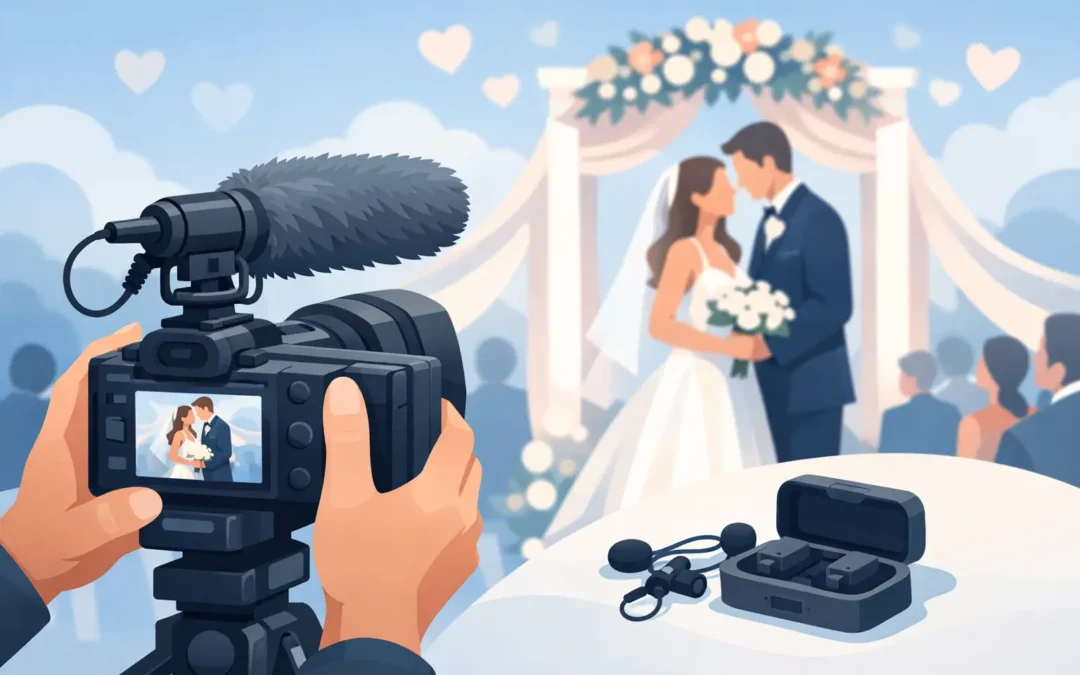
The laugh that breaks through during the vows. Your best friend’s voice wobbling halfway through their speech. The sudden cheer as you walk back down the aisle as a married couple. Can videographers use microphones to capture those moments? Absolutely – and thoughtful audio recording is one of the biggest differences between a lovely-looking wedding film and one that brings you straight back to how the day felt.
A cinematic wedding film is not just beautiful footage set to music. It is movement, atmosphere, little reactions and the words you never want to forget. That is why professional wedding videographers use microphones alongside cameras, carefully and discreetly, throughout the day.
Can videographers use microphones during a wedding?
Yes. Wedding videographers can use a range of microphones and audio recorders to capture clear sound from the ceremony, readings, speeches and natural moments in between. The approach should always be considerate of the venue, registrar or celebrant, and your guests. Nothing should distract from the occasion or turn the front of your ceremony into a tangle of equipment.
Most professional setups rely on small, unobtrusive devices rather than a large microphone held in someone’s face. A videographer may place a tiny wireless microphone on the groom, attach one to a lectern, record from the venue’s sound desk, or position a recorder near a speaker. Each method has a job to do, and the best choice depends on the location, format of the ceremony and how the day is running.
The aim is simple: capture meaningful words cleanly while keeping the filming relaxed and the vibes exactly where they should be – with you and your guests.
Why wedding film audio matters so much
Photography preserves a split second brilliantly. Film gives you the squeeze of a hand, the tremble before a promise and the sound of everyone laughing at an unexpected line. Years from now, hearing the people you love speak can become every bit as precious as seeing them.
Your vows and speeches are the obvious highlights, but sound also creates the emotional texture of a film. The clink of glasses at the wedding breakfast, applause outside the church, a wave rolling in at a coastal venue, or the roar of the dance floor can make a highlights film feel grounded in your actual celebration rather than like a polished montage from anyone’s wedding.
Music still has its place. It gives a wedding film shape and energy. But when it is woven around real words and natural atmosphere, the result feels more personal, elegant and timeless.
How a professional videographer records the key moments
There is no one-size-fits-all audio setup, particularly across the mix of churches, country houses, barns and outdoor spaces found around Somerset and the South West. Good wedding audio is about having options and making calm decisions on the day.
Ceremony microphones
For a civil ceremony or celebrant-led wedding, a discreet recorder on the groom can often capture both partners’ vows clearly, especially when you are standing close together. A separate recorder may be placed near the celebrant or lectern for readings and any important introductions.
Churches can be more complicated. They are often stunning on camera but large, reverberant spaces where voices travel. If the church has a sound system, recording from it can be helpful, although it is never wise to depend on a single source. A videographer may also use independent recorders as backup, allowing the final film to retain the clarity of the words and the beautiful atmosphere of the room.
Outdoor ceremonies bring a different trade-off. They can look incredible, but wind is the enemy of clean audio. Wind protection, careful mic placement and a backup recording are essential. Even then, a gusty cliff-top ceremony may sound different from an indoor one. That is not a failure – it is part of the setting – but experienced filming makes sure the voices remain the priority.
Speech microphones
Speeches are usually where wedding films gain their real storytelling backbone. A recorder connected to the venue’s PA system can provide a direct feed from the handheld or lectern microphone. At the same time, placing a standalone recorder close to the speaker provides a valuable safety net if a cable is loose, the DJ changes a setting, or the sound desk feed is unexpectedly noisy.
This is why it is worth giving your videographer a quick heads-up if speeches are happening outdoors, if there is a surprise performer, or if your dad plans to wander around the room with a microphone. There is always a way to work with it, and knowing the plan means the setup can stay unobtrusive.
Natural sound and guest reactions
Not every memorable piece of audio needs a microphone clipped to somebody. Cameras can record useful ambient sound, and additional recorders may capture applause, laughter and room atmosphere. These details are often used sparingly in the edit, but they add so much life.
The best wedding films do not feel over-produced. They leave space for the real sound of the day: the anticipation before the entrance, the collective gasp when you see each other, and the chaotic joy of a packed dance floor.
Will microphones make the day feel staged?
They should not. This comes down to the videographer’s experience and manner as much as the equipment itself. A good filmmaker explains anything they need from you in a simple, low-pressure way, fits microphones in seconds, and then lets you get on with enjoying your wedding.
You may be asked to wear a small recorder during the ceremony, usually on a jacket, dress pocket or somewhere equally discreet. It is not there to make you perform. It is there so you can speak naturally, quietly and honestly, knowing those words have the best chance of being preserved.
For speeches, the microphones are usually handled by the venue, DJ or band. Your videographer works around that setup rather than taking over. There is no need to repeat lines, pause for the camera or turn a heartfelt toast into a production. The most moving footage happens when everyone forgets they are being filmed.
What permissions are needed?
In most cases, your videographer will speak with the venue coordinator, registrar, celebrant, church representative, DJ or band where necessary. Registrars and churches can have their own rules about where cameras and audio equipment may be placed, particularly during legal parts of the ceremony.
That does not mean the ceremony cannot be recorded. It simply means the approach needs to be respectful. Sometimes a videographer must film from a particular position or cannot place a microphone on the celebrant. A professional will adapt, use alternative audio sources and avoid creating any fuss for you.
If you are planning a church ceremony, a humanist ceremony outdoors, or a venue with live musicians and a full production setup, mention it when you enquire. Those details help your videographer prepare the right kit and ensure there are no last-minute surprises.
Questions worth asking before you book
You do not need to become an audio expert, but it is sensible to ask how vows and speeches will be recorded. Listen for a clear answer that includes backup recording, not just a promise that the camera will pick everything up.
It is also helpful to ask whether full ceremony and speech films are included, or whether the audio is used only in a shorter highlights edit. Both options can be wonderful, but they serve different purposes. A five-minute teaser captures the feeling quickly; a full speech film lets you revisit every joke, toast and happy tear.
At Smart Captures Wedding Films, audio is treated as part of the story, not an afterthought. The goal is always polished, cinematic coverage that still feels like your day – relaxed, full of personality and genuinely yours.
When you are choosing a wedding videographer, pay attention to how their films sound as well as how they look. The clearest vows, the warmest voices and the spontaneous laughter may be the details that bring the whole memory rushing back.