
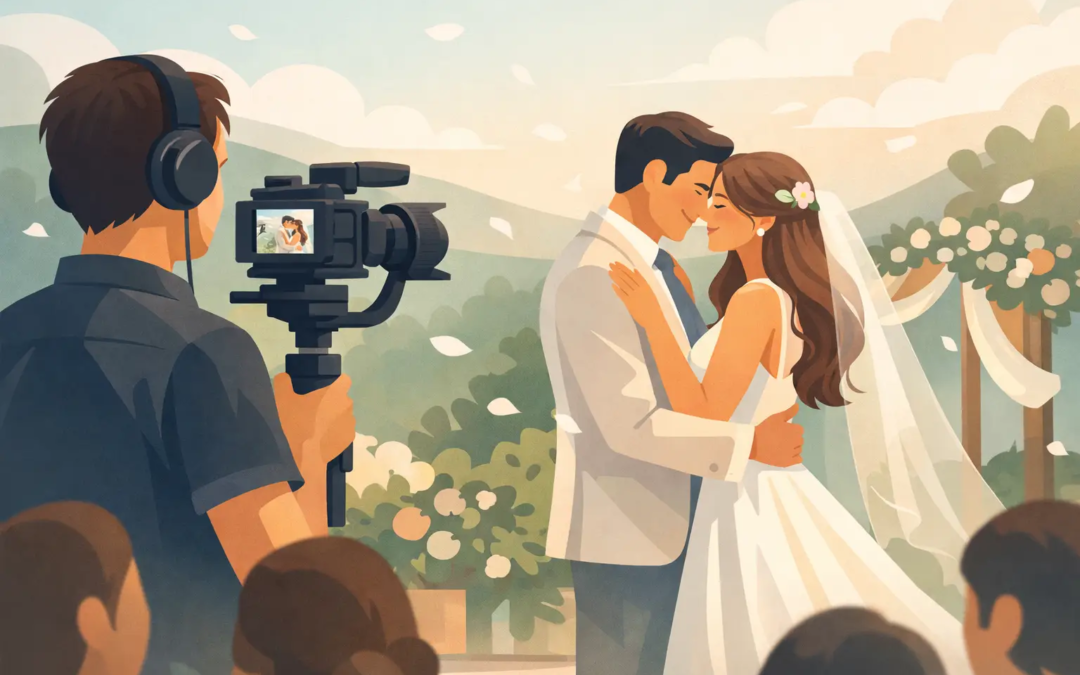
The thought of being filmed can make even the most laid-back couple feel a little self-conscious. You may be picturing a camera appearing whenever you hug a parent, laugh with your friends or have a quiet minute together. So, can wedding videos feel natural? Absolutely. With the right approach, your film should feel less like a production taking over your day and more like a beautifully observed record of everything that made it yours.
A natural wedding film is not about pretending the cameras are not there. It is about having a filmmaker whose energy helps you stop worrying about them. When you feel comfortable, the laughter is real, the hugs last a little longer and the little in-between moments have room to happen.
What makes a wedding video feel natural?
It begins long before the wedding morning. A good videographer takes time to understand what matters to you, from the atmosphere you are creating to the people you cannot imagine the day without. That means they know when to be close for an emotional exchange and when to step back as the moment unfolds.
On the day, documentary-led coverage is the heart of a natural film. Rather than constantly directing the action, your videographer watches for it: your best friend fixing your veil, the nervous laugh before the ceremony begins, the glance across the table during speeches, or the joyful chaos of the dance floor. These are the moments that carry the personality of a wedding.
Sound plays a huge part too. A film feels more honest when it includes the crack in a voice during vows, the applause after a brilliant speech, the music drifting from the reception and the roar of your guests as the party gets going. Photographs preserve a beautiful instant. Film brings back the movement, voices and atmosphere around it.
Natural does not mean unnoticed
There is a common misconception that relaxed wedding videography means a filmmaker stays at the edge of every moment with a long lens. Sometimes that is exactly right. During your ceremony, speeches or an intimate conversation, a discreet presence protects the atmosphere.
But great coverage also requires anticipation and confident positioning. Your videographer may move quietly to capture a parent’s reaction during your vows or come closer when confetti fills the air. The aim is never to interrupt the moment, but to make sure it is preserved properly. You should not have to choose between being present and having a cinematic record of the day.
The best filmmakers know how to read a room. They work closely with your photographer, venue team and celebrant, move with purpose, and understand when the focus should be entirely on you and your guests. That calm awareness is what makes professional coverage feel easy rather than intrusive.
Can wedding videos feel natural and still look cinematic?
Yes, and this is where the magic sits. “Cinematic” does not have to mean overly posed, dramatic or detached from reality. It can mean thoughtful composition, flattering light, purposeful editing and a story that builds emotionally. Your wedding is already full of visual beauty, whether that is golden light over a Somerset field, the elegance of a Bath city venue or a windswept coastal celebration in Devon or Dorset.
A cinematic film simply gives those details the care they deserve. It might use a wide shot to show the scale of your ceremony setting, close-up footage of hands squeezing during the vows, or drone coverage to reveal the landscape around your venue. These elements add atmosphere, but they should always support the story rather than distract from it.
There may be a few moments where gentle direction helps. For example, a short couples shoot can give you breathing space after the ceremony and create some of those elegant, intimate shots for your highlights film. This should never become a lengthy photoshoot that takes you away from your guests for an hour. Usually, 10 or 15 relaxed minutes is enough.
You do not need to perform. You might be asked to walk together, chat about the day so far, or simply take a moment to enjoy being newly married. The most natural footage often comes just after the prompt, when you forget the camera and start reacting to one another.
The comfort factor matters more than you think
Couples rarely regret having a wedding film because they looked imperfect or laughed too loudly. What they remember is whether they felt at ease. That is why personality matters when choosing your videographer.
You are inviting this person into some emotional, high-energy and occasionally chaotic parts of your day. They may be there while you are getting ready, during the nerves before the aisle, beside the dance floor late at night and for the tears you did not expect. Technical skill is essential, but so is having someone who is warm, upbeat and genuinely pleasant to have around.
At Smart Captures Wedding Films, the goal is to bring calm energy, good fun and clear confidence to the day. Couples should feel like they have an experienced creative professional in their corner, not another thing to manage. When the people around you feel relaxed, you will too.
A pre-wedding chat can make a huge difference here. It is a chance to share any worries, talk through the timings, mention family dynamics, and explain which moments matter most. Perhaps you are nervous about speaking on camera, perhaps one parent is especially sentimental, or perhaps the dance floor is likely to be the main event. These details help shape coverage that feels personal rather than generic.
How to help your wedding film stay relaxed
Your videographer sets the tone, but a few simple choices can make the experience even more natural. First, build a realistic timeline. A rushed morning can make everybody feel tense, while even a small amount of breathing room allows for genuine moments to happen.
Consider whether you want preparation footage. It is often full of brilliant anticipation, laughter and meaningful interactions, but it only works if you are happy to have a camera there while you get ready. If you prefer that time to be private, say so. Your film should reflect your comfort level, not a checklist.
It also helps to let key people know you have a videographer. They do not need to act differently, and they certainly do not need to stare down the lens. A quick mention means they are less likely to step in front of an important camera angle during the ceremony or speeches.
Most of all, resist the urge to monitor how you look on film. Your job is to get married, hug your people, eat the food, listen to the speeches and have a proper celebration. The best footage happens when you are immersed in the day rather than trying to create content from it.
Give the important moments time
Some parts of a wedding are naturally fast, but others benefit from slowing down. If you have written personal vows, allow a beat afterwards. Doing a first look with a parent? Do not feel you have to rush on to the next part of the schedule. Or maybe your grandparents are there, take the extra hug.
These are not staged moments. They are real moments given enough space to land. A thoughtful film preserves the words, expressions and reactions that can otherwise blur together by the end of such a full day.
What you will be grateful to see again
Years from now, it may not be the perfectly arranged group shot that stops you in your tracks. It may be hearing the sound of your partner’s voice as they say their vows. It may be the way your friends cheered during the speeches, your dad laughing in the background, or the exact look on your face when the doors opened for the ceremony.
That is why natural wedding videography is such a valuable investment. It does not ask you to turn your wedding into a film set. It allows the emotion, movement and brilliant unpredictability of the day to remain intact, then shapes it into something timeless that you can return to whenever you want to feel it all again.
Choose a filmmaker whose work feels like real people having the best day of their lives, not people trying to look like someone else. When you feel comfortable enough to be fully yourselves, the film will take care of the rest.