When couples watch their wedding film back years later, it is usually the vows, the laughter during speeches, and those slightly shaky voices that hit hardest. That is why a strong ceremony and speeches filming guide matters so much. These are the parts of the day you cannot recreate, and they deserve more than a quick clip or patchy sound.
For many couples, this is where the real value of wedding videography becomes obvious. Flowers fade, the cake gets eaten, and even brilliant photos cannot bring back the exact sound of your partner saying their vows or your dad pausing halfway through a speech because he is trying not to well up. Filming these moments properly is part technical skill, part timing, and part knowing how to stay present without getting in the way.
Why ceremony and speeches filming matters so much
The ceremony and the speeches carry the emotional spine of the day. They are not just formalities between the stylish bits. They hold the words, reactions, and atmosphere that shape how your wedding actually felt.
A beautiful highlights film can absolutely capture the energy of the day, but full ceremony and speeches filming gives you something different. It preserves the complete story. You hear the nerves before the first line, the laughter that ripples across the room, and the little responses from guests that often pass in a blur on the day itself.
That fuller coverage is especially valuable if you are investing in a wedding that brings together family and friends from different places. For couples getting married in Somerset and across the South West, there is often a real mix of generations, accents, personalities and emotion in one room. Those voices become part of the memory.
What good ceremony filming should include
Great ceremony coverage should feel elegant and unobtrusive, not staged or distracting. The goal is to capture the moment as it unfolds naturally while making sure the important details are actually there in the finished film.
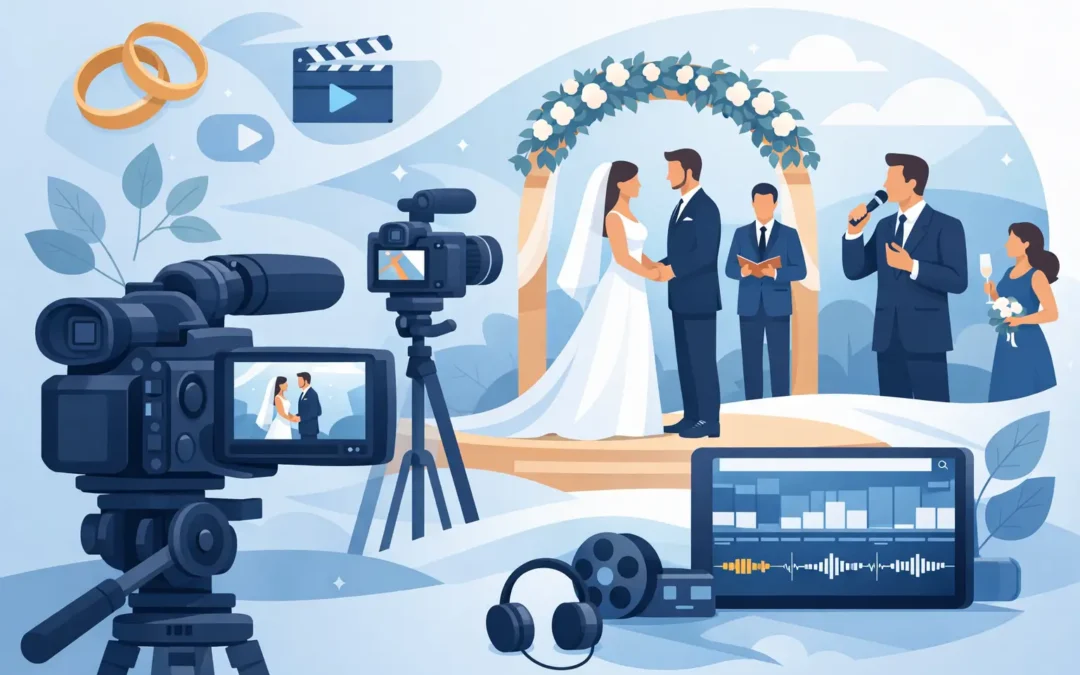
The biggest element is sound. Lovely visuals mean very little if the vows are muffled or the registrar cannot be heard. Professional audio recording usually involves discreet microphones placed on key people, along with backup recording where possible. That matters because ceremony spaces can be unpredictable. Some are bright and airy with perfect acoustics, while others are echoey, dimly lit or have strict movement rules.
Camera placement matters just as much. A single angle can miss reactions, especially during entrances, ring exchange and the first kiss. Multi-camera coverage helps create a polished, cinematic result while also protecting those one-off moments from being lost. If one angle is blocked by a guest leaning out into the aisle with a phone, there is another to cut to.
There is also a balance to strike between being close enough to capture emotion and far enough away to keep things relaxed. The best ceremony filming does not make the room feel like a film set. It simply lets the moment breathe.
The practical reality of different ceremony spaces
Every venue brings its own challenges. Churches often have more formal rules around movement and positioning. Outdoor ceremonies can look incredible, but wind is not a friend to clean audio. Barns and manor houses can be wonderfully atmospheric, though lower light levels and tighter spaces need thoughtful setup.
This is where experience counts. A videographer who knows how to adapt quickly can protect the feel of the day without turning practical issues into stress for the couple. You should not need to think about where a camera is going during your vows.
A filming guide for wedding speeches that actually works
Speeches are often where the day shifts gear. The ceremony brings the emotion, and the speeches add personality, humour and those unexpected moments nobody saw coming. One brilliant toast can become the part of the wedding film everyone rewatches.
A good speeches setup starts with clean, reliable audio. That usually means recording directly from the microphone system when available, while also capturing separate backup audio. Venue sound systems vary massively. Some are excellent, some are a little temperamental, and some look better than they sound. Relying on one source alone is risky.
Framing matters too. It is not enough to film only the person speaking. Reactions are half the story. The couple looking at each other, the best mates laughing in the background, a grandparent wiping away a tear – those details give speeches shape and warmth in the final edit.
Timing and awareness are also essential. Speeches can move quickly from hilarious to heartfelt in seconds. A videographer needs to anticipate who will react, when to hold a close shot, and when to widen out and let the room speak for itself. That judgement is what makes the finished film feel alive rather than simply documented.
How to help your videographer capture everything smoothly
The best wedding films are a team effort, even when they feel effortless on screen. Couples do not need to manage the technical side, but a few simple choices make a real difference.
If your ceremony venue has filming restrictions, let your videographer know early. That gives them time to plan around fixed positions or access limitations. The same goes for your speeches setup. If speeches are happening in a marquee, outside, or in a room with unusual acoustics, it helps to flag that in advance.
It is also worth encouraging anyone giving a speech to hold the microphone close and speak steadily. They do not need media training, just a gentle reminder that clear audio is part of preserving the moment properly. If they decide at the last second to wander away from the mic or speak while facing a wall, even the best setup is working uphill.
If you are creating a running order, give your videographer a copy. Knowing when readings, music or surprise speech moments are coming means they can be ready without fuss. Good planning does not remove spontaneity. It protects it.
What couples often overlook
One of the biggest misconceptions is that ceremony and speeches filming is straightforward because those parts of the day are relatively still. In reality, they are technically some of the most demanding moments to cover well. You only get one chance, there are often restrictions on movement, and the sound needs to be spot on.
Another thing couples sometimes overlook is how much these sections shape the final wedding film beyond the full-length edits. Vows and speech audio often become the emotional thread that ties together the highlights film. Those spoken words layered over the visuals bring depth, rhythm and meaning. Without strong source material, the whole film can feel flatter.
There is also the question of coverage length. Some videographers include only excerpts, while others offer full ceremony and speeches filming as part of a more complete package. Neither is automatically right or wrong. It depends on what you want from your film. If you know you will want to revisit every word, not just the edited best bits, it is worth choosing coverage that reflects that from the start.
The difference between filming and storytelling
Anyone can point a camera at the front of a room. What makes the result feel timeless is the storytelling behind it. That means understanding pace, emotion, atmosphere and how one moment connects to the next.
A polished wedding film should not just show that the speeches happened. It should let you feel the build-up before them, the room settling, the first laugh landing, and the shift in mood when somebody says something unexpectedly tender. The same goes for the ceremony. It is not only about documenting the legal part. It is about preserving the energy in the room and the connection between the two of you.
That is where a relaxed documentary approach works beautifully. When couples feel comfortable, everything becomes more natural. The footage has space to breathe, the reactions are genuine, and the whole film feels less like a performance and more like memory.
Choosing the right videographer for this part of the day
If ceremony and speeches matter deeply to you, ask direct questions before booking. How is audio recorded? Is there multi-camera coverage? Are full edits included, or only short excerpts? Have they filmed in venues similar to yours? These are practical questions, but they lead to a much more emotional result.
You are not just booking someone to record events. You are trusting them with the moments that hold the most meaning and the least room for error. A calm presence matters. So does taste. So does knowing when to step in and when to quietly let things unfold.
For couples who want cinematic quality without feeling awkward or over-directed, that balance is everything. It should feel polished, personal and easy all at once.
At Smart Captures Wedding Films, that balance sits right at the heart of how these moments are covered – elegant visually, relaxed on the day, and always focused on what the moment actually feels like.
When you are choosing what matters most in your wedding film, keep this in mind: the words will mean even more later than they do right now.