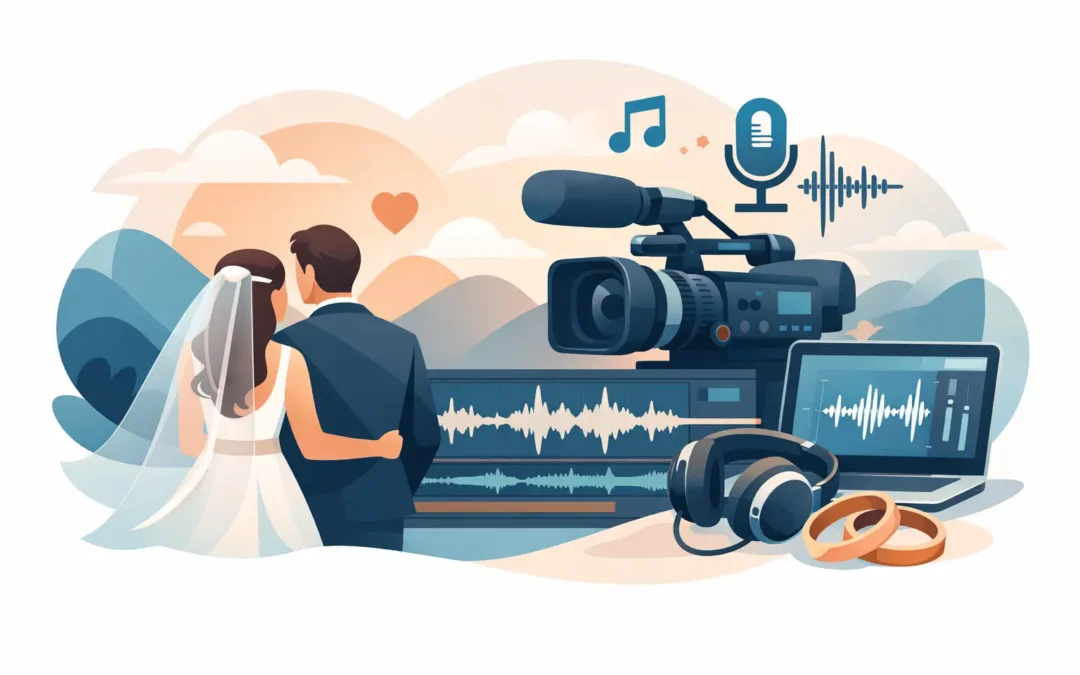
The moment your partner’s voice catches during the vows, the cheer as you walk back down the aisle, your dad’s laugh halfway through his speech – those are the details that make a wedding film feel alive. If you’re wondering how to include audio in wedding film in a way that feels elegant rather than intrusive, the answer is simple: sound should support the story, not compete with it.
A beautiful wedding film is never only about what the day looked like. It’s about atmosphere, personality and emotion. The best films let you hear the day as well as see it, so when you press play years later, it takes you straight back to the feeling of it.
Why audio matters so much in a wedding film
Music gives a film rhythm, but real audio gives it heart. Without voices, reactions and the natural sound of the day, even gorgeous footage can feel slightly distant. You see the smiles, but you do not quite feel the moment land in the same way.
That is why knowing how to include audio in wedding film properly makes such a difference. It turns a highlights reel into a story. A line from your vows, a quiet voice note during bridal prep, the roar of the confetti moment, or the opening of the speeches can add meaning and shape. These are often the parts couples remember most.
There is also a big difference between hearing audio and using it well. Too much raw sound can feel messy. Too little can make the film feel polished but flat. The sweet spot is thoughtful editing, where the right moments are layered in naturally and with intention.
Start with the moments that matter most
Not every second of a wedding day needs to be heard. The strongest films are selective. They choose the audio moments that carry the most emotional weight and use them to guide the story.
For most couples, the ceremony is the obvious starting point. Vows are often the emotional centre of the film because they are personal, meaningful and impossible to recreate. Even a short line or two can anchor an entire highlights edit.
Speeches are just as valuable, and sometimes even more versatile. They often include laughter, family stories and those little observations about you as a couple that no one else could say. A good filmmaker can lift key lines from the speeches and place them across different parts of the film, helping the story unfold naturally.
Then there is the in-between sound people do not always think about. The rustle of a dress, glasses clinking during drinks, applause after the ceremony, the swell of the room before dinner, live music, cheers from the dance floor. These ambient sounds bring texture. They stop the film from feeling overly manufactured and help it keep the genuine atmosphere of the day.
How to include audio in wedding film without it feeling forced
The biggest concern some couples have is that microphones and recorded audio will make the day feel staged. In reality, when it is done properly, it should be barely noticeable.
Professional wedding filmmakers usually capture sound discreetly using small microphones on the groom, celebrant or speech microphone setup, alongside on-camera ambient audio and external recorders. The point is not to turn your wedding into a film set. It is to preserve what is already happening, quietly and cleanly.
This is where experience matters. A relaxed documentary approach works best because the sound is gathered as part of the flow of the day, not by stopping moments and asking people to repeat themselves. You still get all the natural energy, just with the technical care needed to make it usable in the final edit.
There is also a creative side to this. Good editing knows when to let a line breathe and when to pull back. A powerful sentence from your vows might sit beautifully over the morning preparations. A funny speech line might work better over candid drinks reception footage. The aim is not to present audio in a strict timeline, but to use it in a way that feels cinematic and emotionally true.
The best types of audio to include
If you are deciding what matters most, start with the parts of the day you would be genuinely sad to lose. For most couples, that is vows and speeches first. If those are captured well, your film already has a strong emotional backbone.
After that, ambient sound adds polish and realism. Think of it as the layer that makes everything feel more immersive. It might only appear for a few seconds at a time, but it matters. Hearing the applause after the first kiss or the crowd singing along in the evening brings a completely different energy than music alone.
Some couples also love the idea of recorded messages. That could be a short note to camera during prep, a quiet reflection from one of you before the ceremony, or even audio from a private letter reading. This can be incredibly moving, but it depends on your personality. If that kind of thing feels natural to you, it can add something really special. If it feels awkward, skip it. Forced sentiment rarely works as well as genuine moments.
Live music can be lovely too, especially for ceremony entrances, cocktail hour or the first dance. The only thing to keep in mind is that live performance audio is less predictable than a clean microphone feed, so the final result depends on the environment and setup on the day.
Music and real audio need to work together
One of the most overlooked parts of how to include audio in wedding film is balance. A film still needs a musical identity. Music helps with pacing, emotion and cohesion. But if the track is too dominant, your voices can get lost. If there is too much speech and no room to breathe, the film can feel heavy.
The strongest edits blend both. Music carries the overall mood, while real sound gives depth and personality. This is what makes a film feel cinematic and honest at the same time.
It also means not every meaningful moment needs full original audio. Sometimes a single phrase is enough. Sometimes silence, or near silence, does more than a busy soundtrack ever could. There is a lot of subtle judgement involved, which is why wedding film audio is not just a technical extra. It is part of the storytelling.
What couples can do to help on the day
You do not need to think like a sound engineer to get great results, but a little planning helps. If your celebrant or registrar allows microphones, that is worth confirming in advance. For speeches, using a proper microphone setup usually gives cleaner audio than asking everyone to project across the room.
It also helps to let your filmmaker know if there are any moments with special meaning. Maybe one of you is reading a letter before the ceremony, perhaps a grandparent is giving a blessing, or there is a surprise performance in the evening. These details can easily become some of the most memorable audio in the final film.
Most importantly, just be yourselves. The best sound comes from real reactions, not performative ones. You do not need to speak to the camera all day or create moments that are not naturally there. If the atmosphere is relaxed and you are fully in the day, the good stuff tends to happen on its own.
Why professional audio changes the final film
A lot of couples realise they want wedding audio only after the day has passed. They remember the look of the ceremony, but what they miss most is the sound of it – the actual voices, the room, the laughter, the tone. That is the part that tends to fade fastest in memory, which makes it incredibly valuable to preserve.
This is one reason luxury wedding filmmaking feels like more than a visual record. It captures the full sensory memory of the day. At Smart Captures Wedding Films, that blend of movement, atmosphere and authentic sound is a huge part of what makes a film feel timeless rather than simply trendy.
When audio is handled well, your wedding film does not just show events in a beautiful way. It lets you hear your people, your promises and the energy of the celebration as it really was. That is often the difference between watching your wedding back and feeling it all over again.
If you are choosing what matters most in your film, do not think of audio as an add-on. Think of it as the voice of the memory itself.