
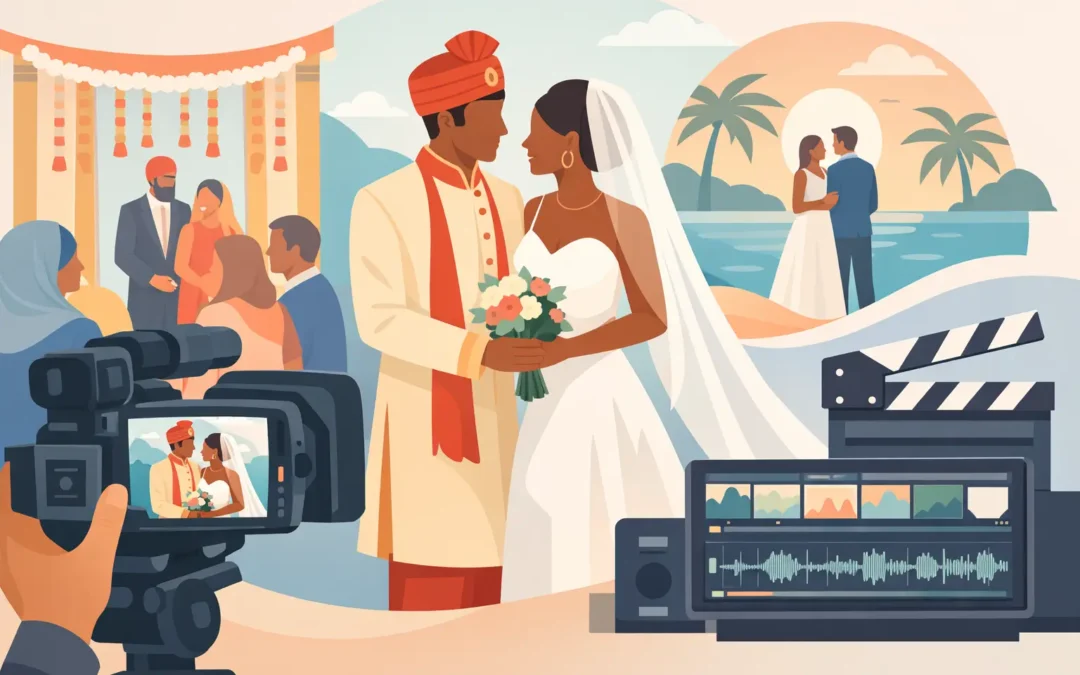
The best multicultural wedding film example is not one that simply records two sets of traditions. It is one that lets you feel the meeting of families, languages, music, faith, food and personalities as it actually happened. From a quiet moment of preparation with parents to a packed dance floor where everyone finally knows the words to the same song, the film should feel like your day – not a carefully staged version of it.
For many couples, a multicultural wedding is brilliantly full. There may be more than one ceremony, an outfit change, significant family rituals, readings in different languages and a guest list ready to celebrate properly. That richness deserves thoughtful filmmaking, a relaxed approach and enough time to catch the moments between the planned ones.
What a multicultural wedding film example should show
A strong film gives every meaningful part of the day room to breathe. It does not treat cultural traditions as a quick visual montage before moving on to a standard wedding template. The details matter, of course: the fabrics, jewellery, florals, ceremonial items and incredible food all help set the scene. But the emotional meaning behind them is what makes the story personal.
Perhaps one partner is seeing their family’s ceremony through their new spouse’s eyes for the first time. Or maybe grandparents are hearing a familiar prayer, song or language surrounded by a room of people who have travelled from across the UK and beyond. Maybe two families who did not know each other a year ago are laughing together during the speeches. Those are the moments that give a wedding film real heart.
A cinematic film should also show the contrasts that make your celebration yours. A civil ceremony at a Somerset country house can sit beautifully alongside a tea ceremony, a Hindu blessing, a Nigerian traditional entrance or a lively baraat. There is no need to flatten those different energies into one visual style. The aim is to make the whole day feel cohesive while allowing each part to retain its own character.
Begin with the feeling, not a filming checklist
Before the wedding, your videographer should want to know more than the running order. A useful conversation starts with questions such as: Which moments carry the most weight for your families? Are there customs guests may not immediately understand? Is there anyone whose reaction you would particularly love to have captured? Will parts of the day be spoken in another language?
This does not mean turning your wedding into a production meeting. It simply gives your filmmaker the context to recognise an important glance, gesture or exchange when it happens. A documentary-led approach works especially well here because it leaves room for genuine reactions. You should not have to pause an emotional moment to repeat it for the camera.
The best preparation is often a shared understanding of priorities. If the morning ceremonies are deeply significant but the evening party is where your personalities really come alive, that shapes how coverage is planned. If both families are meeting for the first time during the wedding weekend, the little interactions around welcome drinks may matter as much as the formal vows.
The sound is part of the story
Wedding films are sometimes judged first by their beautiful images, and rightly so. Yet sound is often what brings a multicultural celebration back to life years later. The tone in a parent’s voice during a reading, laughter during a bilingual speech, live musicians building anticipation before an entrance and the roar from the dance floor all carry memory in a way photographs cannot.
Clear audio needs planning. Ceremony microphones and considered placement during speeches can make the difference between hearing a meaningful exchange and only seeing it. If readings or vows are in a language not all guests speak, a film can still retain their power. A short subtitle, translated voiceover or carefully chosen reaction shot may be appropriate, but it depends on the couple and the tone they want. Not every word needs explaining. Sometimes the emotion is beautifully clear on its own.
One day, several rhythms
A multicultural wedding often has a pace of its own. It may begin early, move between locations, include several outfit changes and continue long after a typical UK wedding breakfast has finished. That is part of the fun, but it is also a practical reason to choose coverage that reflects the real shape of the day.
Trying to fit a long celebration into a short filming window can mean losing the natural build-up. You might capture the ceremony but miss the family welcome beforehand, or film the speeches but leave before the party reaches its best point. More time allows the story to develop: anticipation in the morning, the formal emotion of the ceremony, the warmth of shared food and the release of the evening celebration.
There is always a balance. You do not need cameras in every corner or a crew that makes the day feel crowded. A calm, experienced filmmaker can work quietly through busy rooms, be ready for fast-moving entrances and still give you space to be present with your guests. Multi-camera coverage can be particularly helpful during ceremonies and speeches, preserving reactions without anyone having to move around distractingly.
Let each tradition look like itself
Cinematic does not have to mean overly polished or slow-motion from beginning to end. A tender tea ceremony may call for quiet, intimate framing and natural sound. A high-energy entrance needs movement, pace and a camera operator who can keep up with the vibes. The editing should respond to what happened rather than forcing every section into the same tempo.
This is where experience and taste matter. A film should be elegant enough to feel timeless, but lively enough to bring back the joyful chaos of the day. It can move from candlelight and emotional vows to colour, music and good fun without feeling disjointed. Your wedding is allowed to have different moods.
Drone footage can add a beautiful sense of place, particularly at a South West venue with gardens, coastline or rolling countryside nearby. It is a lovely addition rather than the main event. The film should still be rooted in faces, voices and the little flashes of connection that only happen when people are together.
The people make the film memorable
Traditions may give a day its structure, but people give it its spark. In a thoughtful multicultural wedding film, you might see an aunt adjusting an outfit before a ceremony, friends learning a dance, a parent watching a child from across the room or two sides of a family enthusiastically debating whose music will fill the next set.
These are not filler shots. They are the proof of how your wedding felt to be there. Years from now, you may notice people in the background who are no longer with you, hear a voice you would recognise anywhere, or relive the exact expression on your partner’s face before you walked in. That is why a relaxed documentary style has such lasting value.
It also matters that your videographer feels comfortable around your guests. People are more likely to be themselves when the person holding the camera brings calm energy, a friendly manner and the confidence to blend into a lively room. The goal is never to direct the joy. It is to be ready when it arrives.
Questions to ask when choosing your filmmaker
When you watch a multicultural wedding film example, look beyond the highlight reel’s prettiest shots. Ask whether the film gives the couple’s families equal care. Notice whether important moments are heard as well as seen, whether the edit has pace without rushing, and whether guests appear relaxed rather than posed.
It is also worth asking how the filmmaker approaches unfamiliar traditions. The right answer is not that they already know everything. It is that they are curious, respectful and willing to listen. Every family does things slightly differently, even within the same culture, faith or community. Your wedding should not be treated as a stereotype or copied from someone else’s film.
At Smart Captures Wedding Films, that balance of thoughtful planning and relaxed on-the-day energy is central to creating films that feel natural. The aim is to preserve the elegance, emotion and brilliant personality of your celebration without pulling you away from it.
Choose a filmmaker who is genuinely excited by the full story: the meaningful rituals, the unexpected laughter, the music that gets everyone moving and the quiet seconds only you will recognise. Your film should let you return not just to what happened, but to the feeling of two worlds becoming one very joyful room.