
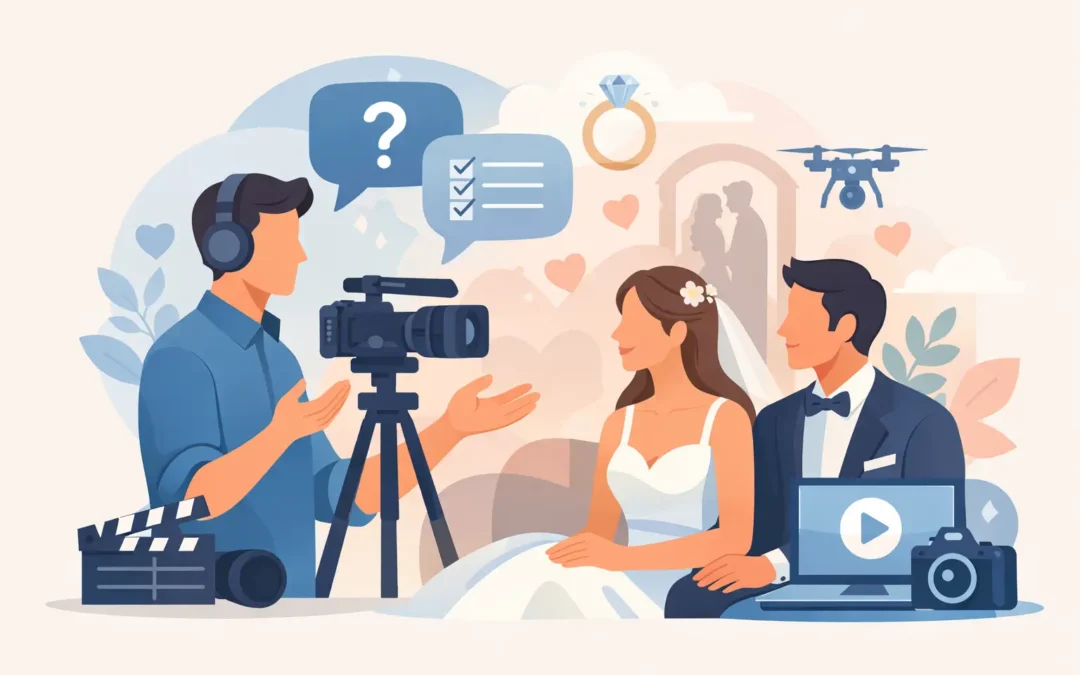
Booking your wedding videographer can feel a bit different from booking any other supplier. You are not just choosing someone with a camera. You are choosing the person responsible for preserving the movement, voices, atmosphere and emotion of one of the biggest days of your life. That is exactly why knowing the right questions to ask wedding videographer matters so much.
A beautiful film is about far more than sharp footage or lovely music. It is about whether your filmmaker understands your vibe, helps you feel relaxed, works well with your photographer and quietly captures the real moments without turning your day into a production set. The right questions help you spot that difference early.
Why the right questions matter
Most couples can tell when they like a film, but it is harder to know why one videographer feels like the right fit and another does not. Sometimes it comes down to style. Sometimes it is personality. Sometimes it is the practical side that gets overlooked until much later, such as coverage hours, audio quality or how the final films are delivered.
Asking thoughtful questions gives you a clearer picture of the full experience, not just the highlight reel on Instagram. It also helps you compare suppliers properly. A lower price can look appealing at first, but if it includes shorter coverage, limited edits or no professional audio, you may not be comparing like for like.
Questions to ask wedding videographer before you book
1. How would you describe your filming style?
This is one of the most useful opening questions because it gets straight to the heart of how your day will feel on camera. Some videographers are very directive and cinematic in a stylised way. Others work in a more relaxed documentary style, stepping in lightly when needed but mostly letting the day unfold naturally.
Neither is automatically better. It depends on what suits you. If you want a wedding film full of genuine laughter, natural reactions and real atmosphere, you will probably want someone whose approach feels calm, unobtrusive and people-focused.
2. Can we watch a few full wedding films, not just highlights?
Highlight films are brilliant for showing the best moments, but full films tell you much more about consistency. You can see how a videographer handles a full ceremony, speeches, transitions between parts of the day and quieter moments that matter just as much.
This is often where quality really shows. Gorgeous trailers are lovely, but full films reveal whether the storytelling, audio and editing hold up across the whole wedding.
3. How do you capture audio?
Couples often focus on visuals first, but audio is what gives a wedding film emotional weight. Vows, speeches, laughter, applause, a parent’s voice cracking during a toast – these are the details that bring everything rushing back.
Ask what equipment they use to record clear sound and whether they mic up key moments like the ceremony and speeches. Stunning footage with poor audio never feels as powerful as it should.
4. How much of the day do you cover?
Coverage hours can vary a lot. Some videographers offer a set number of hours. Others include more complete coverage from preparations through to dancing.
Think carefully about what matters most to you. If you want the full story, from the anticipation in the morning to the energy on the dance floor, limited coverage may leave gaps. A shorter package can work well for a smaller wedding, but it is worth being sure it matches your plans rather than simply your initial budget.
5. What is included in your package?
This question sounds obvious, but it is where misunderstandings often happen. Ask whether the package includes a highlights film, teaser, full ceremony edit, speeches, drone footage, multiple cameras and travel.
Two videographers might seem similarly priced while offering very different levels of value. Knowing exactly what is included helps you make a fair decision and avoids awkward surprises later.
6. How do you help couples feel comfortable on camera?
This matters more than many people expect. Most couples are not professional models, and they should not need to be. A good wedding videographer knows how to create space for natural moments without making you feel awkward or over-directed.
Listen closely to how they answer. You want someone who brings calm energy, gives gentle guidance where needed and keeps things enjoyable. The best films usually come from couples who feel like themselves.
7. Have you worked at our venue or in similar settings?
Venue experience can be helpful, particularly if your wedding is in a stately home, marquee, barn or coastal setting with changing light and weather. That said, having not filmed at your exact venue is not a deal-breaker, it often can be more creative to the videographer.
What matters more is whether they are confident adapting to different spaces and conditions. A skilled videographer should know how to work creatively in whatever setting your day brings.
Questions about the experience on the day
8. How do you work alongside the photographer?
Your photographer and videographer will spend a huge part of the day near each other, so this is a genuinely important question. The best teams work in sync, communicate well and respect each other’s craft.
If a videographer is experienced, they will usually have a thoughtful answer about collaboration. You want someone who can capture everything beautifully without getting in the way of the stills, and vice versa.
9. Do you film alone or with a second shooter?
There is no single right answer here. A solo videographer can often work very discreetly and efficiently, especially for intimate or mid-sized weddings. A second shooter can add extra angles, more coverage and flexibility during busy parts of the day.
It depends on the scale of your wedding and what is included in the package. If your ceremony and reception involve multiple locations or a large guest count, extra coverage can be particularly valuable.
10. Do you use drones, and if so, when?
Drone footage can add a gorgeous cinematic layer, especially at countryside venues across Somerset and the South West. It can help set the scene beautifully and show the setting in a way ground footage cannot.
But it is worth asking realistically rather than assuming it is guaranteed. Drone use depends on weather, venue rules, time, safety and legal restrictions. A professional videographer should be clear about that rather than promising something they may not be able to deliver.
11. What happens if something goes wrong?
It is not the most glamorous question, but it is a sensible one. Ask about backup cameras, memory cards, audio equipment and contingency plans for illness or emergencies.
You are not looking for drama. You are looking for professionalism. The answer should reassure you that your memories are being handled with care from start to finish.
Questions to ask wedding videographer about editing and delivery
12. How would you describe your editing style?
Filming style and editing style are related, but not identical. Some films are fast-paced and music-led. Others are more emotional and story-driven, with space for dialogue, ambient sound and the natural rhythm of the day.
This comes down to personal taste. If you want something timeless, ask how they balance cinematic polish with authenticity. The best wedding films do not just look good now. They still feel right years later.
13. How long will it take to receive our films?
Editing wedding films properly takes time, especially when there are multiple cameras, speeches, ceremony audio and a carefully crafted highlights film involved. Even so, you should know the expected turnaround before booking.
A quick teaser soon after the wedding can be a lovely touch, while the main film may take longer. Clarity is what matters here.
14. Can we choose the music?
Some couples want to be very involved in music choices. Others are happy to trust the videographer’s creative judgement. Either approach can work well, but it is worth understanding how they handle licensing and whether client suggestions are welcome.
Music shapes the feel of a film massively, so this is not a small detail. It affects whether your final video feels energetic, romantic, elegant or quietly emotional.
15. How do you deliver the final films?
Ask whether your films are delivered through an online gallery, downloadable files, USB or a combination. Also ask what formats you receive and whether the films are easy to share with family.
This may seem like an end-stage detail, but good delivery makes the whole experience feel polished. When you are investing in a premium wedding film, the final handover should feel just as thoughtful as the filming itself.
A final thought on choosing the right person
The best questions to ask wedding videographer are not there to catch anyone out. They are there to help you find someone whose work, energy and approach genuinely fit your day. Technical skill matters, of course, but so does the feeling you get when you imagine that person with you from morning preparations to the last big singalong.
A great wedding film is not just a record of events. It is a way of stepping back into the atmosphere, hearing the voices you love and feeling the whole day move again. If someone can offer that while making you feel relaxed, looked after and completely yourselves, you are probably onto something very good.