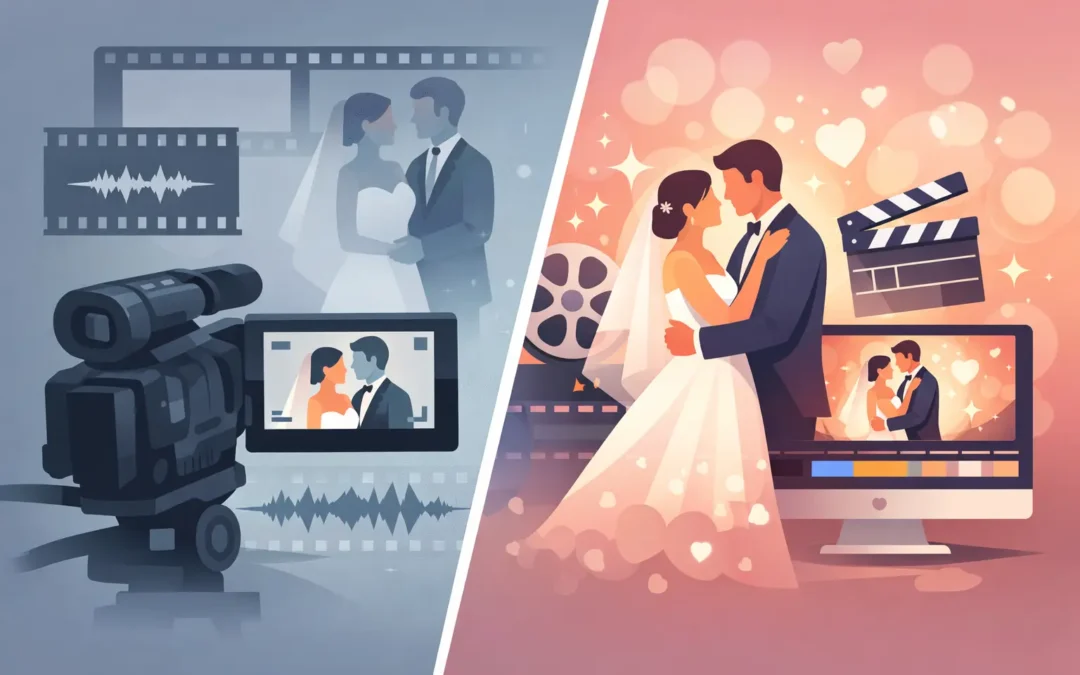
The confetti has settled, the flowers have been packed away and your first married dance is already becoming a blur of brilliant, happy chaos. This is usually when couples begin to think about raw footage versus edited film. Is every clip worth having, or is the finished wedding film the part you will truly return to?
It is a very fair question. A wedding day moves quickly and is full of moments you may not see: a parent taking a breath before the ceremony, your best friend fixing their outfit before a speech, the room erupting during an unexpected dance-floor moment. Raw clips can sound like the safest way to keep it all. But a cinematic edit does something different, and for most couples, something much more meaningful.
What raw footage really looks like
Raw footage is the original material recorded by a videographer before it has been selected, colour graded, stabilised, mixed or shaped into a story. It may include lengthy sections of a camera waiting for the next moment, test shots, changes in exposure, alternative angles and repeated takes of the same scene.
That does not make it unimportant. It is the essential starting point for every beautiful wedding film. Yet it is not the same thing as a watchable record of the day. A ceremony filmed from multiple cameras, for example, produces several separate files that need syncing. A speech may be captured with a clean microphone recording as well as ambient room sound. On their own, these files can feel technical, fragmented and surprisingly difficult to revisit.
There is also a practical reality. Raw files are enormous and often need specialist software, plenty of storage and a little patience to view properly. They are working materials, rather than a polished keepsake designed for the sofa, a glass of fizz and a proper emotional rewatch on your anniversary.
Raw footage versus edited film: the real difference
An edited wedding film is not simply raw footage with the quiet bits removed. It is a considered retelling of your day, built around the moments, voices and atmosphere that reveal who you are together.
The editor watches through the coverage, chooses the strongest reactions and finds the small details that make the story feel personal. They match meaningful words from vows or speeches with the right images, balance music with natural sound, and shape the pace so the film has energy without ever feeling rushed. Colour grading brings consistency across changing weather, candlelit rooms and bright summer gardens. Sound design lets you hear the applause, laughter and the little pauses that make a moment land.
That craft is why a highlights film can make you feel as though you are right back there, even though it is only a few minutes long. It does not try to show every second. It gives the best seconds room to breathe.
A full ceremony and speeches film has a different job. Here, completeness matters. Professionally edited long-form films preserve the words you chose, the readings that meant something and the speech that had everyone laughing or reaching for a tissue. These edits are still carefully prepared, with camera angles and audio brought together cleanly, but their purpose is to let you experience those key parts in full.
Why editing makes a wedding feel more like your wedding
A good edit is personal because it makes choices. Two couples can marry at the same Somerset venue, under the same summer skies, and have completely different films. One day may be full of belly laughs, high-energy entrances and a packed dance floor. Another may be quietly emotional, with heartfelt family moments and a long, relaxed wedding breakfast. Neither approach is better. The film should follow the feeling of the day.
This is where a relaxed documentary approach makes all the difference. When filming is unobtrusive and you are free to enjoy your people, the footage contains real glances, real nerves and proper joy. During the edit, those honest moments can sit alongside the cinematic shots: the sweep of the venue, a beautiful dress in motion, a drone view of the countryside, or the warm glow of the evening reception.
The result should never feel like a generic montage placed over your wedding. It should feel elegant, natural and unmistakably yours.
The emotional value is in the sound as much as the picture
Photographs preserve a split second beautifully. Film brings back the voices around it. Years from now, hearing your partner say their vows in their own voice may matter more than you can imagine now. So might the sound of a grandparent laughing, the cheer as you walk back down the aisle, or the slightly shaky start of a best person’s speech.
Raw audio is rarely ready to enjoy. Wind, clattering glasses, venue noise and differing microphone levels all need careful handling. An edited film gives those sounds clarity while retaining the atmosphere. You still hear the room. You simply hear what matters most within it.
That balance is particularly valuable at lively weddings. The magic of a packed room is not silence. It is the cheers, the music, the chatter and the sense that everyone you love is having a very good time. Editing helps that energy feel immersive rather than messy.
Is there ever a reason to ask for raw footage?
Sometimes, yes. If you work in a creative field, are planning a separate project, or simply love the idea of keeping an extensive archive, raw footage may appeal. It can also offer reassurance if you are worried about a particular unscripted moment being missed from the final film.
Before making it a priority, ask what you will realistically do with it. Hundreds of unedited clips can become a digital box in the loft: valuable in theory, rarely opened in practice. They also cannot replace the time, storytelling judgement and technical work of a professional edit.
It is worth discussing your wishes with your videographer before booking. Ask what is included in the package, whether full ceremony and speeches films are delivered, how long films will be available for download, and whether any additional footage can be supplied. Clear expectations are much more useful than assuming raw files and finished films are interchangeable.
What to prioritise when choosing your wedding film
Rather than focusing only on the quantity of footage, look closely at the films a videographer has already created. Do the people in them look relaxed? Can you hear the emotion in the vows and speeches? Does the editing feel timeless, or is it built around a short-lived trend? Most importantly, does each film have its own personality?
A strong wedding filmmaker will bring calm, good energy to the day, work well alongside your photographer and capture plenty without making you feel as though you are on a set. The edit is where that coverage becomes a film, but the experience of being filmed is what makes the footage honest in the first place.
At Smart Captures Wedding Films, that means combining documentary moments with cinematic detail, then giving every story the time it deserves in the edit. The aim is not to make your wedding look like someone else’s. It is to preserve the feeling you worked so hard to create.
A film made for future versions of you
There is no wrong answer if raw footage gives you peace of mind and it is available as an add-on. But if you are choosing where to invest, place the value on the finished film. That is the version you will send to family, play on anniversaries and one day show to people who were not there.
Your wedding is not memorable because every minute was recorded. It is memorable because of the people, the words, the atmosphere and the moments that caught you by surprise. A thoughtful edit gathers those pieces and lets you feel them again, with all the good vibes intact.