
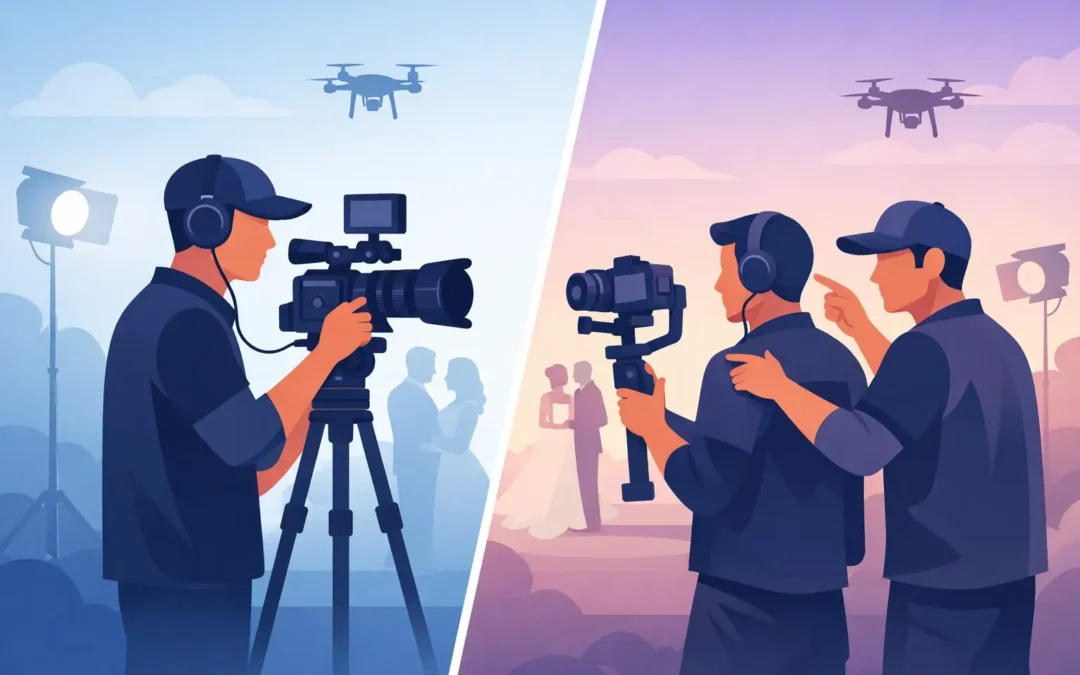
The confetti lasts seconds. Your partner’s face as you arrive at the ceremony lasts even less. When couples ask whether to choose a single shooter or two videographers, that is usually what sits behind the question: how much of the day can be preserved without turning a joyful celebration into a production set?
There is no automatic right answer. A brilliant solo filmmaker can create a beautiful, emotionally rich wedding film, while a second videographer can make a real difference at a large, fast-moving celebration. The best choice comes down to your plans, priorities and the kind of coverage that will help you relive the atmosphere properly.
What a single videographer can capture
A skilled single shooter is far from limited to one angle all day. With thoughtful planning, discreet cameras positioned for key moments and a documentary eye, one filmmaker can capture the story as it naturally unfolds: the morning excitement, the ceremony, hugs after the aisle walk, the laughter in the speeches and the dance floor chaos later on.
For many weddings, this is exactly the right feel. One relaxed, friendly presence is easy for you and your guests to forget about. That matters if you want your film to feel natural rather than heavily staged. The camera is there for the happy tears and good fun, but it is not competing with the moment.
Solo coverage works especially well for intimate weddings, relaxed country celebrations and days where most events happen in one venue or nearby locations. If you are having around 50 to 100 guests, getting ready in the same place or within a short drive, and keeping your timeline unhurried, one experienced videographer can often deliver wonderfully complete coverage.
It also offers a particular storytelling strength. One filmmaker follows the emotional thread of the day closely, learning the rhythm of your people and anticipating where the next meaningful moment may happen. The resulting film can feel personal, cohesive and beautifully observed.
When two videographers are worth it
Two videographers are not simply about having more footage. They are about being in two places when the day demands it.
The clearest example is morning preparations. If you are both getting ready at different locations, a second videographer means both stories can be captured properly. You might have one person filming the final touches, cards, nerves and laughter with one partner, while the other captures the buzz around the other. Neither side of the morning has to be rushed or missed.
During the ceremony, a second operator can create greater freedom too. One can focus on your expressions and natural reactions, while the other captures a wider perspective, guest emotion or an alternative angle. This gives the edit more texture without requiring constant movement around the room. It can be particularly valuable in churches, grand venues and ceremonies with aisle restrictions.
Speeches are another big consideration. A multi-camera setup can provide strong coverage with a single filmmaker, but a second videographer adds the ability to catch reactions as they happen. While one camera stays with the speaker, another can find a parent wiping away a tear, your friends trying not to laugh, or the look between the two of you when a story lands perfectly.
Two videographers can be especially worthwhile if your wedding includes four or more of the following:
- Preparations at separate locations
- A large guest list or a busy, multi-room venue
- A long journey between preparations, ceremony and reception
- A church or formal ceremony with movement restrictions
- Several cultural traditions or events happening at once
- A packed schedule with little room to reset between moments
For a big South West wedding at an estate, manor house or venue with expansive grounds, a second filmmaker can also help capture the scale of the celebration. One can stay close to the people and the emotion while the other covers the wider scene, cocktail hour energy or aerial footage where conditions allow.
The trade-off is not just budget
Choosing two videographers naturally means a larger investment. You are paying for another experienced professional, more equipment, more footage to organise and a more detailed editing process. For couples who value fuller coverage of a complex day, that investment can feel completely worthwhile.
But more people are not always better. If you are planning a quiet 40-person wedding with a single preparation location and a laid-back timeline, two videographers may add coverage you do not genuinely need. The most luxurious choice is not automatically the biggest package. It is the coverage that feels considered for your day.
There is also the guest experience to consider. The right team should be calm, tactful and a pleasure to have around, but every additional supplier is another person in the room. At a small cottage wedding or an intimate city celebration, one personable filmmaker may feel more in keeping with the atmosphere.
Single shooter or two videographers: questions to ask
Rather than deciding based on a label alone, look at the shape of your actual wedding day. Are you getting ready separately? Is the ceremony in a dark church with strict rules? Are there 150 guests spreading across a large venue? Do you care deeply about seeing reactions during speeches, not only hearing the words?
Then think about what you want your finished film to hold. Some couples are drawn to a focused, elegant story that follows the core of the day. Others want as much of the surrounding energy as possible: both preparation rooms, guests arriving, the cocktail hour chatter and every spontaneous reaction.
It is also worth asking a prospective videographer how they approach ceremony and speech coverage when working solo. A professional should be able to explain where cameras are placed, how sound is recorded and how they remain unobtrusive. High-quality audio and carefully placed static cameras can preserve the words and key moments brilliantly, even with one person filming.
Ask how a second videographer would be used, too. The answer should be specific to your plans. “More angles” is not enough on its own. You want to know whether they will cover separate preparations, guest reactions, alternative ceremony positions or simultaneous parts of the reception.
The quality of the team matters more than the headcount
A second videographer should never be an anonymous extra with a camera. They need to understand the lead filmmaker’s style, work respectfully alongside photographers and know how to read a wedding room. The best two-person teams communicate quietly, give you space and create coverage that feels consistent in the final film.
Equally, a solo videographer needs the confidence and experience to make smart decisions quickly. Weddings do not pause for a missed shot. A calm filmmaker knows when to stay close, when to step back and when the moment is more important than chasing perfection.
At Smart Captures Wedding Films, the aim is always to make filming feel easy. Whether coverage is led by one filmmaker or supported by a second, the priority is the same: genuine moments, beautiful sound, cinematic detail and a film that feels like your day rather than someone else’s highlight reel.
Let your wedding, not a rule, make the decision
There is no need to choose two videographers because you think you should, and no need to settle for one because it sounds simpler. A single shooter can capture an extraordinary wedding with warmth, elegance and depth. Two videographers can give a fuller view when your plans have multiple locations, a bigger guest count or lots happening at once.
Start with the moments you would be genuinely sad not to see again. If both sides of the morning, guest reactions and the wider energy of a large celebration matter deeply, a second videographer may be one of the best decisions you make. If your priority is a relaxed, intimate day with one trusted creative quietly capturing the feeling of it all, one may be perfect.
The right coverage should leave you free to be present, hold hands, laugh loudly and enjoy every second. That is where the best footage always begins.