
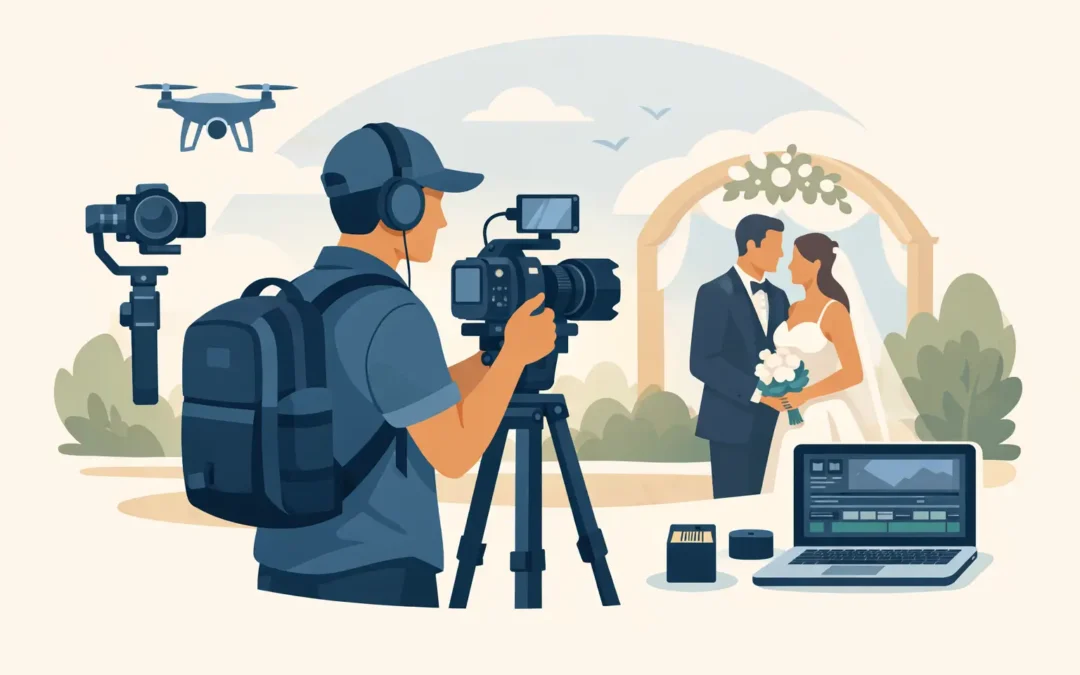
The confetti lasts seconds. Your best friend’s toast might bring the room to tears, then have everyone laughing before the mains arrive. And once the music starts, the dance floor becomes its own little world. A solo wedding videographer is there to notice those fleeting shifts in energy, preserving the voices, movement and atmosphere that make your day feel completely yours.
For many stylish, personal weddings across Somerset and the South West, one talented filmmaker is not a compromise. It is a considered choice. The right person can move quietly through the day, build a genuine rapport with you and your guests, and create an elegant film without turning the celebration into a production set.
That said, every wedding is different. Whether one videographer is the best fit depends on your plans, your priorities and the kind of experience you want while being filmed.
What a solo wedding videographer brings to your day
A solo filmmaker brings a wonderfully personal approach. From the morning preparations to the last glorious songs of the evening, you have one familiar, calm presence rather than a larger crew moving around the room. For couples who want their film to feel relaxed and documentary-led, that can make a real difference.
There is a rhythm to a wedding day that cannot be directed. A glance across the ceremony room. Your mum taking a breath before fastening the final button. The sudden roar when the band begins. A skilled videographer anticipates these moments, but never forces them. Working alone often encourages a light-footed, observant style: close enough to capture the feeling, discreet enough to let it unfold naturally.
It also creates consistency. The person who gets to know your personalities, hears the stories during the morning and feels the mood of the room is the same person shaping the final edit. That connection can give a wedding film a cohesive, intimate quality. It is not simply a collection of beautiful shots. It is your day told with purpose, pace and emotion.
For many couples, there is a practical benefit too. One filmmaker generally needs less space during bridal preparations, around a ceremony aisle or within a busy reception room. At venues with cosy getting-ready suites, intimate ceremony spaces or relaxed garden celebrations, this helps the day keep its easy, good-fun vibes.
Can one person capture everything?
The honest answer is that no videographer, however experienced, can physically stand in two places at exactly the same moment. If you are getting ready at separate locations far apart, or you would love extensive footage of both sides of the morning, a second videographer may be worth considering.
But one person can capture far more than many couples expect. Careful planning, multiple cameras and considered audio recording mean key parts of the day can be covered from more than one perspective. During the ceremony and speeches, a solo filmmaker can set up discreet cameras in advance, record clear sound and then focus on the moments happening live: your expressions, your guests’ reactions and the little interactions that bring the edit to life.
This is where experience matters. Great solo coverage is not about rushing from one task to another. It is about knowing which moments need preparation, which moments need presence, and when to step back. A well-planned timeline gives your videographer time to set cameras safely, check audio and still remain part of the action when it matters most.
At Smart Captures Wedding Films, the focus is on creating cinematic films that still feel like a real wedding, not a staged shoot. Multi-camera coverage, professional audio and drone footage where suitable can add scale and variety, while the day itself remains relaxed and centred on you.
When solo coverage is a brilliant fit
A solo wedding videographer tends to suit couples who value natural storytelling over constant direction. If the idea of being followed by a large camera team makes you feel self-conscious, one friendly, confident filmmaker can feel much more comfortable.
It is particularly well suited to weddings where you are largely getting ready at the same venue or nearby, your ceremony and reception are in one place, and you want the emphasis on the atmosphere of the whole day. Think country houses in Somerset, elegant Bath celebrations, coastal Devon weekends, city weddings in Bristol or a marquee filled with your favourite people. The setting may be stylish, but the heart of the film is still the people in it.
Solo coverage works beautifully when the priority is a strong highlights film, a meaningful teaser, full ceremony and speeches footage, and plenty of authentic moments in between. You do not need a camera trained on every guest all day to relive the celebration. You need the right moments, captured thoughtfully and woven together with the sound of the people you love.
The quiet advantage of a familiar face
By the time the evening arrives, your videographer should not feel like a stranger with a camera. They should be someone who has gently helped you feel at ease, worked well alongside your photographer and become a reassuring part of the day.
That familiarity often shows in the footage. Couples relax. Guests stop noticing the camera. The laughter becomes less guarded, the hugs last longer, and the dance floor looks as wild as it actually was. Those are the moments that give a film its warmth.
When a second videographer may be worthwhile
There are occasions when extra coverage adds genuine value. A larger wedding with several hundred guests, a long distance between morning preparations, or a ceremony with particularly meaningful reactions on both sides of the aisle can all make a two-person team appealing.
You may also want a second videographer if your schedule is packed with events happening at once. Perhaps one of you is arriving by boat while the other is greeting guests, or you are planning a grand entrance, cultural traditions or surprise entertainment that needs more than one viewpoint. There is no right answer here. It comes down to what you would most like preserved.
The trade-off is not only budget. A second filmmaker means more equipment and another person around you and your guests. With the right team, that can still feel completely unobtrusive, but it is worth thinking about the atmosphere you want. Some couples love the fuller coverage. Others prefer the understated presence and personal feel of a solo approach.
Questions to ask before booking
Rather than asking only whether a videographer works alone, ask how they work alone. Their answer should give you confidence in both the quality of the finished film and the experience you will have on the day.
Ask how ceremony and speech audio is recorded, whether additional cameras are used for key moments, and how they coordinate with your photographer. Talk through your morning locations and travel times honestly. If you have your heart set on seeing both sets of preparations in depth, say so early. A good filmmaker will explain what is possible, what could be missed and whether extra coverage would make sense.
It is also worth asking about their editing style. Technical coverage matters, but the finished film should still feel like you. Look for work that has natural emotion, clean audio, thoughtful pacing and cinematic detail without losing the spontaneous, joyful bits. You should be able to imagine yourselves in the film, not just admire the shots.
Finally, consider how you feel when you speak to them. Your videographer will be close by during some very personal parts of the day. You deserve someone professional and organised, certainly, but also someone whose energy feels right. Calm when plans shift, upbeat when the party begins, and genuinely pleased to be there.
Making solo videography work beautifully
A few small decisions can make a big difference. Build a little breathing room into your morning rather than scheduling every minute. Keep travel between locations realistic. Let your videographer know about surprise readings, family heirlooms, fireworks, confetti exits or a first dance that turns into a full-on singalong.
For the ceremony and speeches, clear sound is every bit as valuable as gorgeous visuals. Let key speakers know they may be mic’d up, and encourage them to speak towards the room rather than into their notes. Those voices will become part of the memory: the tremble before a vow, the pause before a punchline, the cheers that follow a brilliant speech.
Most of all, give yourselves permission to enjoy it. You do not need to perform for the camera or spend your day posing. A few gentle portraits can be lovely, especially around golden hour, but the magic is in the way you naturally look at each other, celebrate with your people and take it all in.
The best choice is the one that lets you be fully present while trusting that the feeling of the day is being carefully preserved. If one talented filmmaker gives you that confidence, a solo approach can create a wedding film that feels timeless, personal and full of life for years to come.