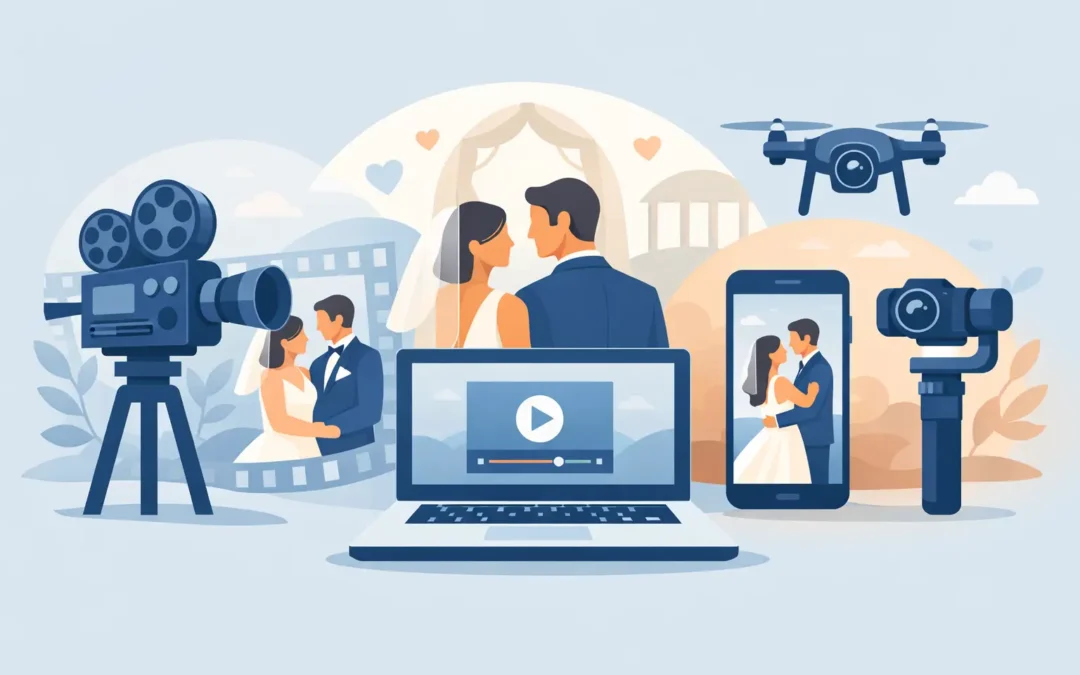
The best wedding video formats do more than give you something beautiful to post the week after the wedding. They give you different ways to return to it: the nervous breath before the ceremony, your dad’s voice during his speech, the cheers after the confetti and the glorious, slightly chaotic dance floor later on. Choosing the right combination means you can enjoy those memories in the moment, then relive them properly for years to come.
For most couples, the question is not whether they want a wedding film. It is which films will feel most valuable once the flowers are gone, the outfits are packed away and the day has become a story you tell together.
The wedding video formats worth knowing
Wedding videography packages can use similar words while meaning slightly different things, so it helps to separate the creative films from the practical delivery details. A teaser, highlight film, feature film, ceremony edit and speeches edit are all different viewing experiences, each with a place in your wedding story.
The teaser film
A teaser is a short, punchy edit, often around 30 seconds to a minute. It is made for the immediate post-wedding excitement: a few beautiful clips, a little atmosphere and enough emotion to make you want to watch it again before breakfast.
This is usually the most shareable format for Instagram, TikTok or sending to friends and family who could not make it. A great teaser has energy, but it is not designed to tell the whole story. Think of it as the first little flash of the feelings to come, rather than your full wedding film.
The cinematic highlights film
For many couples, the highlights film is the one they return to most often. Usually somewhere between three and 10 minutes, it turns the rhythm of your day into a concise, emotional story. It may weave together preparations, the ceremony, portraits, drinks reception, speeches and evening celebrations, often with carefully selected snippets of your vows or speech audio.
The length depends on the filmmaker’s style and the pace of the wedding. A shorter edit can feel elegant and impactful; a longer one creates more room for personalities, meaningful words and the atmosphere of the venue. Neither is automatically better. If you love a fast, editorial feel, a tighter film may suit you. If hearing your people speak is a big part of why you are booking video, a more generous running time is worth considering.
The feature film
A feature film is a longer, more immersive version of the day, commonly between 10 and 30 minutes. Rather than using only the biggest moments, it has space to breathe. You might see more of the morning build-up, relaxed guest interactions, the full shape of the reception and a stronger sense of how the day unfolded.
This format is a lovely choice for couples who have planned an experience, not just a schedule. Perhaps you have chosen a beautiful Somerset country house, a coastal Devon celebration or a lively city wedding in Bristol, and want the setting, sounds and little transitions to be part of the memory. It is also brilliant for anyone worried that the day will fly by – because it will.
Full ceremony and speeches films
Your cinematic film is the emotional story. Full ceremony and speeches edits are the irreplaceable record.
A full ceremony film lets you hear every reading, vow, laugh and shaky breath. It is especially meaningful if you have written personal vows, included family readings, held a church service or have loved ones travelling a long way to be there. The speeches deserve the same thought. The room’s reactions, the unexpected stories, the nerves before someone takes the microphone – these moments often become more precious with time.
Some couples initially wonder whether they will watch these longer edits. The honest answer is that you may not play them every month. But on anniversaries, quiet Sundays, or when you want to hear the voice of someone you love, they can become the films that matter most. Make sure they are recorded with clear, professional audio and multiple camera angles where possible. You only get one chance at the vows.
Choosing wedding video formats around your priorities
Start with what you want to feel when you press play. If you are drawn to beautiful, cinematic storytelling and want a film you can share easily, a teaser and highlights film are a strong pairing. If preserving every word matters as much as the visual atmosphere, add full ceremony and speeches coverage.
It also helps to consider the shape of your day. A short registry office ceremony followed by a restaurant reception may not need the same coverage as a full day with wedding preparations, a church ceremony, garden drinks, golden-hour portraits and a packed dance floor. More time does not simply mean more footage. It gives your filmmaker more opportunities to capture the natural in-between moments that make the final film feel like you.
Your guest list can guide the choice, too. If grandparents, close friends or family members play an important role, longer documentary coverage can be incredibly valuable. A highlight film may show a hug or a smile, while a feature film and full speeches edit preserve the personality, voice and warmth behind it.
The technical formats that matter less – but still matter
Couples do not need to become camera experts, but a few practical questions are worth asking. Your final wedding films should be easy to watch on a phone, laptop and television, without compromising on quality. Most professional filmmakers supply films digitally in high definition or 4K, allowing you to download, stream and keep a copy safely.
4K offers more detail and can look wonderful on larger modern screens, but the craft behind the image matters more than the number itself. Beautiful light, thoughtful composition, natural colour grading and great sound will always make a bigger difference than resolution alone. A well-made HD film will outshine a poorly shot 4K one every time.
Ask how your film will be delivered and whether you will receive downloadable files as well as an online viewing option. Downloadable copies are useful for backing up your memories independently. It is sensible to save them in more than one place, such as a computer and a separate hard drive or secure cloud storage. Technology changes; the moments on film do not.
You may also see vertical edits offered for social media. These can be a fun addition, particularly if you would love to share a few polished moments with friends, but they should complement your main widescreen film rather than replace it. Your wedding deserves to be seen in the format that best holds the full scene, from the setting to the people gathered around you.
A few questions to ask before you book
Before choosing a package, ask how long each film is likely to be, whether ceremony and speeches are supplied in full, and whether audio is recorded separately. Find out how many cameras are used during key moments, what happens if the weather changes, and whether drone footage is included when conditions and venue permissions allow.
It is also worth asking to watch complete examples, not only short trailers. A trailer shows style. A full ceremony, speeches edit or longer feature film shows how a filmmaker handles sound, pacing and real people over time. You want to know that your film will feel polished without feeling overly staged.
At Smart Captures Wedding Films, the aim is always to make filming feel relaxed and good fun, while creating an elegant record that holds onto the emotion of the day. The most natural footage happens when you are present with your people, not performing for the camera.
The right formats are the ones that let you revisit both the headline moments and the details you did not get to see. Choose the film that makes your heart race now, but do not overlook the longer edits that may one day mean even more.