
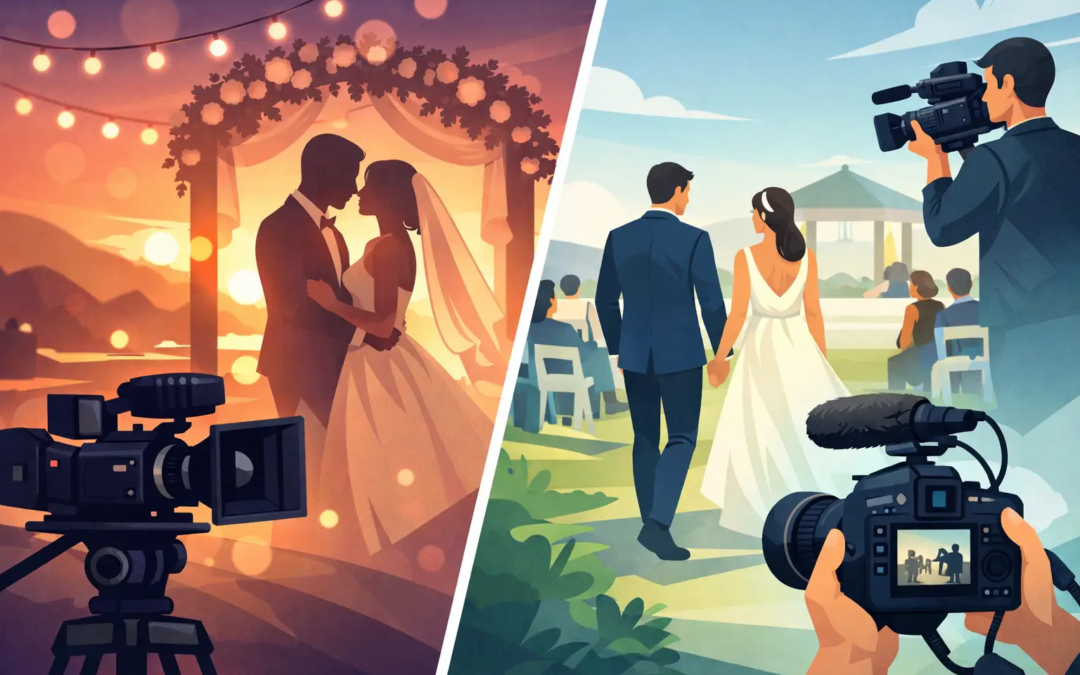
Some couples know exactly what they want from their wedding film. Others get to the videography page, see phrases like cinematic, documentary, storytelling and highlights, and wonder what any of it will actually feel like when they press play in ten years.
If you are choosing between a cinematic or documentary wedding film, the truth is that the best option is rarely one or the other in the strictest sense. Most couples do not want a heavily staged production that pulls them out of the day, and they also do not want a flat record with no atmosphere. They want something that feels beautiful, honest and full of life. That is where the difference really matters.
What a cinematic or documentary wedding film really means
A cinematic wedding film is usually shaped with emotion and atmosphere at the centre. Carefully edited films are to feel immersive, with thoughtful pacing, music, movement, sound design and those small in-between moments that give the day its energy. The wedding film does not just show what happened. It helps you feel it again.
A documentary wedding film leans more into observation. The focus is on real events unfolding naturally, with less interference and less sense of performance. It tends to preserve moments more completely, especially the ceremony, speeches and natural interactions between guests. The style is often quieter, but that does not mean less powerful.
Where couples can get confused is assuming cinematic means staged and documentary means plain. Good wedding filmmaking is more nuanced than that. A cinematic film can still be natural and unobtrusive. A documentary approach can still be elegant, emotional and beautifully crafted.
Why the best wedding films often blend both styles
For most modern weddings, especially stylish but relaxed celebrations across Somerset and the South West, a blend tends to work best. You want the honesty of documentary coverage, because real emotion cannot be faked. But you also want the polish of cinematic editing, because the atmosphere of the day deserves more than a simple timeline of events.
That balance is often what creates a film people actually come back to. You hear the nerves in a voice before the ceremony. You catch the laughter during the drinks reception. All of sudden, you feel the shift in energy when the dance floor properly kicks off. Those moments are documentary in the way they are captured, but cinematic in the way they are shaped into a story.
This is why style matters beyond aesthetics. It affects how present you feel on the day and how emotionally connected you feel to the finished film afterwards.
Cinematic wedding film – who it suits best
If you care about mood, movement and storytelling, a cinematic film will probably speak to you. This style suits couples who want their wedding to feel elevated on screen without losing its personality. It is ideal if you have put real thought into the atmosphere of your day – the setting, the styling, the music, the pace, the little details guests will remember.
It also works beautifully when you want your film to have a strong emotional arc. The morning anticipation, the ceremony, the confetti chaos, the golden-hour portraits, the speeches, the party. A cinematic edit gives each part space, shape and rhythm.
The trade-off is that a cinematic highlights film is not always designed to show every second in full. It is about storytelling rather than pure completeness. That is why many couples choose a package that includes both a highlights edit and separate full ceremony or speeches coverage. You get the emotional film for reliving the feeling, and the longer edits for preserving the words exactly as they happened.
Does cinematic mean lots of posing?
Not necessarily, and this is a big one. Couples often worry that cinematic means they will be followed around all day being asked to repeat things or stare into the distance while everyone waits for them at the bar.
A good filmmaker does not need to manufacture moments to make a film feel cinematic. Gentle direction can help at times, especially during a couple session, but the strongest footage usually comes from real interaction. Walking together, laughing between yourselves, chatting after the ceremony, being fully in the day. That is where the magic is.
Documentary wedding film – who it suits best
A documentary wedding film is perfect for couples who want to keep things very natural and unfussy. If the thought of being directed too much makes you cringe, or if you simply want your videographer to quietly capture events as they unfold, this approach will feel reassuring.
It is especially valuable if your priorities are the people and the moments rather than the production. Family reactions, voices, unscripted exchanges, guest energy, children doing unpredictable things, hugs that happen in a second and are gone. Documentary coverage protects those memories brilliantly.
This style can also suit weddings with lots happening across the day. Cultural traditions, multiple locations, large guest numbers and full evening celebrations all benefit from a filmmaker who is tuned into observation and timing.
The trade-off here is that if the edit is too purely documentary, it may not have the same sense of shape and cinematic lift some couples are hoping for. It preserves reality beautifully, but it may not always give that sweeping emotional finish unless the editing approach brings in more storytelling craft.
The questions that help you choose the right style
Rather than asking which style is better, ask what you want to remember most.
If your answer is the feeling of the day, the atmosphere, the movement, the sound of your vows over beautiful visuals, then cinematic elements matter. If your answer is hearing every word of the speeches, seeing guests as they truly were and remembering the day exactly as it unfolded, documentary coverage matters.
Most couples want both. They want elegance without awkwardness. Energy without chaos. Real moments, edited with care.
That is also why the person behind the camera matters just as much as the style itself. A wedding film can look gorgeous, but if the videographer changes the mood of the day or makes you feel self-conscious, it affects what gets captured. The best experience comes from someone who can bring calm, good vibes and confidence while still working with intention.
How to spot the difference in a filmmaker’s work
When you watch sample films, pay attention to how they make you feel rather than only how they look.
Do the couples seem relaxed? Can you hear real voices and ambient sound, or is everything carried by music alone? Are there meaningful exchanges between people, or mostly styled details and portrait shots? Does the film feel timeless, or does it lean into editing trends that might date quickly?
Also notice whether the storytelling feels personal. A strong wedding film should feel like your day, not like the same template applied to different venues and outfits.
For many couples, the sweet spot is a filmmaker who captures in a documentary way and edits in a cinematic way. That gives you authenticity at the point of filming and emotion in the final delivery. It is a lovely balance, especially if you want your film to feel polished but never forced.
Why style should fit your wedding, not the other way round
A luxury countryside wedding in Somerset, a city celebration in Bristol, a coastal day in Devon or a stately venue in Bath will all carry a different rhythm. Your wedding film should respond to that naturally.
A lively party with loads of guest interaction might benefit from a more documentary-led approach during the day, with a cinematic edit pulling together the best energy. A more intimate wedding with thoughtful styling and emotional vows might suit a softer, more atmospheric film. Neither is more valid. It depends on the day and on you.
That is why a one-size-fits-all approach rarely feels right. Good filmmakers adapt. They read the room, work with the light, the pace and the personalities around them, and create something that feels true rather than generic.
At Smart Captures Wedding Films, that blend of cinematic quality and relaxed documentary coverage is exactly what many couples are looking for. Not a performance. Not a plain record. Something elegant, honest and full of feeling.
So, should you choose cinematic or documentary?
If you are stuck between the two, you probably do not need to choose a side. You need a film that captures genuine moments while still being crafted with care.
The most lasting wedding films are not the ones that shout the loudest about style. They are the ones that let you hear the voices, see the movement, feel the nerves, the joy and the atmosphere all over again. They preserve the big moments, but they also hold onto the tiny ones you did not even realise were happening.
That is what makes a wedding film worth it. Not just because it looks beautiful, but because years from now it still feels like you.