
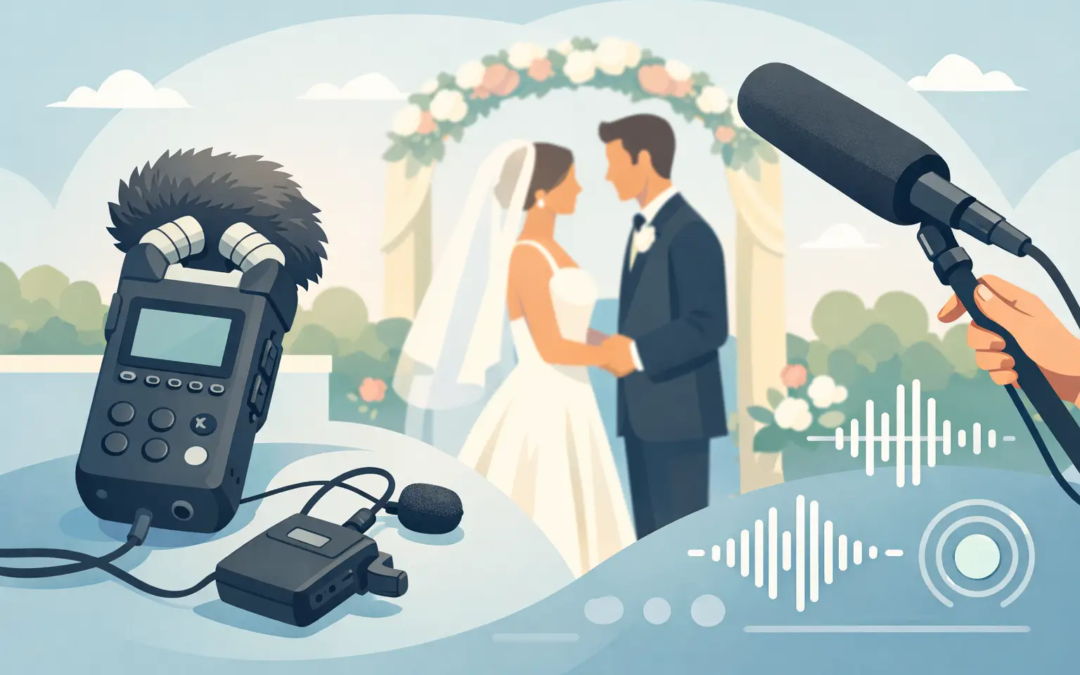
The moment the vows begin, everything changes. The room settles, voices soften, and suddenly the words matter just as much as the visuals. If you’re wondering how to capture wedding audio clearly, this is the part many couples don’t realise makes such a difference. Beautiful footage can set the scene, but clear sound is what brings the feeling rushing back.
A wedding film should never leave you straining to hear your ceremony or guessing what was said during the speeches. The laugh before a best man starts. The wobble in a parent’s voice. The quiet little exchange between the two of you just before the registrar begins. Those are the details that give a film its heart. And getting them cleanly takes more than simply putting a camera at the back of the room and hoping for the best.
Why clear audio matters more than most couples expect
Most people naturally think about the visual side first. Dress, flowers, confetti, golden-hour portraits, candlelight at dinner – all of it matters. But sound carries the emotion in a completely different way. You can see someone holding back tears, but hearing their voice crack makes the moment land.
That’s especially true in a relaxed documentary-style wedding film. When the goal is to preserve the day as it really felt, audio becomes part of the storytelling, not just a technical extra. The atmosphere of guests arriving, the applause after the first kiss, the cheering as you enter your wedding breakfast, even the natural ambience of the venue – all of that adds depth and energy.
Poor sound does the opposite. It pulls you out of the moment. If audio is muffled, distorted, or full of echo, even the most cinematic footage loses impact very quickly.
How to capture wedding audio clearly during the ceremony
The ceremony is usually the biggest priority because there are no second takes. Once those words are spoken, that’s it. A professional wedding filmmaker will nearly always use dedicated audio equipment rather than relying on in-camera sound alone.
In most cases, the clearest approach is to mic the groom, officiant, or both with discreet wireless microphones or compact audio recorders. That allows the vows and key spoken moments to be recorded close to the source, which is where clarity really comes from. A microphone near a person’s chest will almost always sound better than a camera microphone placed several metres away.
That said, it depends a little on the ceremony setup. A church with high ceilings creates very different acoustic challenges from a smaller indoor civil ceremony or an outdoor celebration in the Somerset countryside. In a large church, you may need to balance close-mic recordings with ambient sound so the final film still feels natural and spacious. Outdoors, wind becomes the issue, and that needs proper protection on every microphone being used.
There’s also the human side of it. Not every officiant is happy to be miked, and some venues have firm rules about where suppliers can stand or place equipment. That’s why experience matters. Good wedding audio isn’t just about owning the gear. It’s about adapting calmly, quickly, and respectfully to the realities of the day.
Placement matters more than expensive kit alone
It’s very easy to assume that better gear automatically means better audio. In reality, microphone placement often matters more. A premium recorder hidden badly can still produce disappointing sound, while a modest setup placed properly can sound lovely.
Clothing also plays a part. Rustle from a jacket, a dress detail brushing a mic, or jewellery catching against fabric can all create noise. That’s why discreet placement and a quick check before the ceremony begins are so important.
Speeches need a different approach
If the ceremony is about intimacy, speeches are about control. The environment tends to be busier, the room noisier, and the pace less predictable. Glasses clink, guests laugh over each other, and some speakers hold a microphone properly while others wave it around like they’re headlining Glastonbury.
To capture speeches well, a filmmaker will often take a feed directly from the venue’s sound system if one is available and reliable. That can provide very clean speech audio, but it should not be the only source. Venue sound desks vary wildly, and not every setup is well managed. Batteries fail, levels peak, and DJs understandably prioritise the room experience rather than a wedding film.
For that reason, backup recording is essential. A recorder attached to the handheld microphone, a second recorder near the speaker position, or both, gives much more security. Redundancy might not sound glamorous, but it is often what saves important moments.
Why backup audio is non-negotiable
This is one of those things couples rarely see, but they absolutely benefit from it. Weddings move quickly. There’s no pause button if a cable comes loose or a speaker starts unexpectedly. Multiple audio sources give flexibility in the edit and protection against the odd little surprise that every wedding day can bring.
That’s part of what makes professional coverage feel stress-free. You shouldn’t be thinking about whether your nan’s reading or your partner’s vows have actually been recorded. You should be in the moment, having a brilliant day.
Natural atmosphere is what makes a film feel alive
When people ask how to capture wedding audio clearly, they often mean vows and speeches. Those are the obvious headline moments. But atmosphere matters just as much in the final film.
The sound of heels on old stone floors. Birds during an outdoor drinks reception. Guests chatting under festoon lights. The swell of applause after the speeches. These little layers make a wedding film feel immersive rather than flat. They help it breathe.
This is where on-camera microphones and ambient recorders come into their own. They collect the texture of the day – the bits you don’t script but always remember. Used well, they support the main dialogue without overpowering it. Used badly, they can make a film sound messy. So the goal is balance, not just volume.
Music can enhance emotion, but it should never bury the voices
A cinematic edit often includes carefully chosen music, and rightly so. It adds pace, elegance, and shape. But if the track overwhelms the actual voices from the day, something valuable gets lost.
The best wedding films know when to let the real audio lead. A quiet breath before a vow. Laughter during speeches. A few meaningful lines from a reading. These moments carry more emotional weight than wall-to-wall soundtrack ever could.
That balance is a creative choice as much as a technical one. It’s about preserving the atmosphere while making sure your film still feels polished, elevated, and timeless.
The biggest risks to wedding audio
A few things tend to cause problems again and again. Wind is a big one for outdoor weddings. Echo can be tricky in churches and barns. Background noise from traffic, catering staff, coffee machines, or enthusiastic guests near a microphone can all creep in too.
Then there are the unpredictable moments that simply come with live events. Someone forgets to use the microphone. A speaker turns away mid-sentence. A registrar speaks very quietly. None of this means the audio is ruined, but it does mean experience and preparation make a huge difference.
An organised filmmaker will usually think ahead about these issues before the day even begins. They’ll consider the venue, ceremony style, likely speech setup, and any restrictions. That planning stage is often what separates consistently good sound from hopeful guesswork.
What couples should ask their wedding videographer
You do not need to become an audio expert before booking your film. But it is worth asking a few simple questions. How do you record vows and speeches? Do you use backup audio sources? Have you worked in churches, barns, marquees, and outdoor venues? What happens if the venue sound system isn’t usable?
You’re not looking for lots of jargon. You’re looking for confidence, clarity, and a calm plan. A good answer should leave you feeling reassured that the emotional core of your day will be preserved properly.
At Smart Captures Wedding Films, that balance matters a lot – cinematic visuals, yes, but also the voices, atmosphere, and real energy that make the memories feel complete.
Clear audio is part of how your wedding will feel years from now
Long after the table flowers are gone and the dress is packed away, the voices stay precious. Not just the words themselves, but the way they sounded in that exact moment. Young, nervous, excited, proud, slightly shaky, full of love.
That’s why clear wedding audio is never just a technical box to tick. It is part of the memory. Part of the atmosphere. Part of what turns a lovely film into something you feel in your chest when you watch it back.
So if you’re planning your wedding and weighing up what really matters in your film, pay attention to the sound. The visuals may catch your eye first, but the audio is often what stays with you longest.