
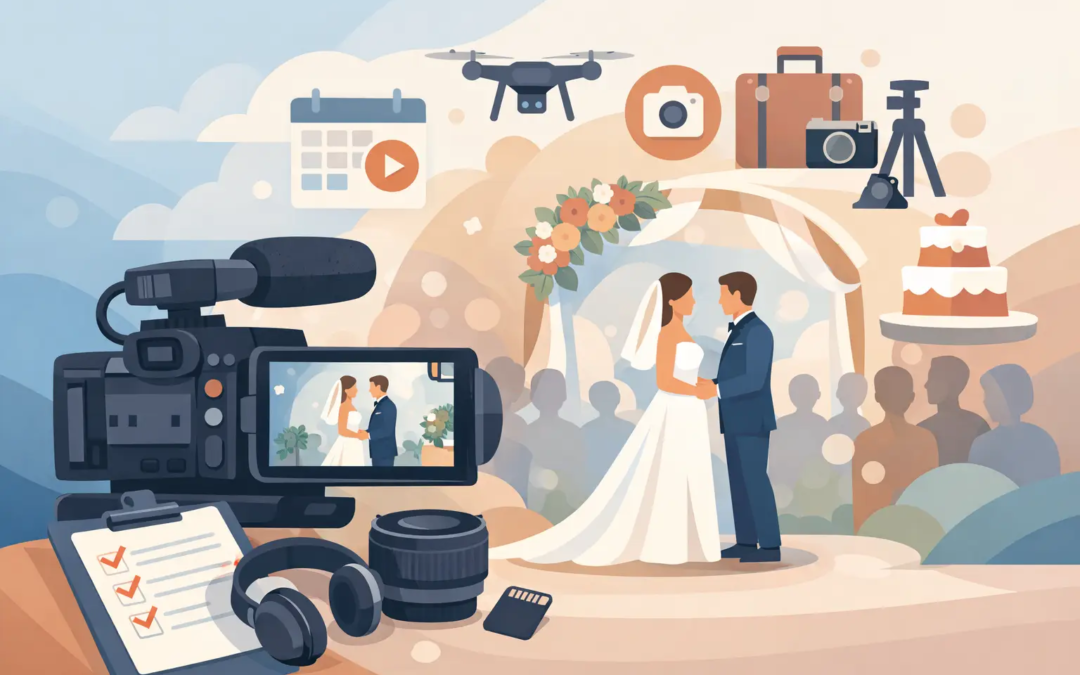
The best wedding films never feel forced. They feel like your day as it really was – the nerves while you get ready, the laughter in the morning, the movement of your dress, the cheers after the ceremony, the sound of voices you will want to hear again in ten years’ time. If you are wondering how to prepare for wedding filming, the good news is that it is far less about performing for the camera and far more about creating space for real moments to happen.
A brilliant film starts long before anyone presses record. The way you plan your morning, choose your spaces, brief your suppliers and build your timeline all affects how relaxed and cinematic the finished result will feel. The aim is not to turn your wedding into a production set. It is to make sure your filmmaker has what they need to capture everything beautifully, while you stay fully present in it.
How to prepare for wedding filming without losing the vibe
The first thing to know is that good wedding filming works best when the day has room to breathe. If every part of the schedule is crammed tight, even the most experienced videographer is working against the clock. A little breathing space changes everything. It allows for natural interactions, calmer transitions and those in-between moments that often become the heart of the film.
When building your timeline, it is worth allowing more time than you think you need for morning preparations, getting into outfits, travel between venues and couple portraits. Hair and make-up nearly always runs a touch over, and once people start chatting, hugging and pouring a glass of fizz, the morning moves quickly. A generous schedule means you are not rushing through moments that should feel exciting and joyful.
It also helps to think about the atmosphere you want, not just the timings. If you want your film to feel elegant, relaxed and full of genuine emotion, your morning environment matters. A crowded room with bags on the floor, takeaway cups everywhere and ten people all trying to speak at once can feel a bit chaotic on camera. That does not mean it needs to be perfect, but a little tidying and a calm layout go a long way.
Choose spaces with light, sound and room in mind
Couples often focus on how a venue looks in photographs, but film adds two more layers – movement and sound. That is why preparation spaces matter so much. Bright natural light helps skin tones look soft and flattering, and larger rooms give your filmmaker space to move discreetly without everyone feeling on top of each other.
If possible, choose a getting ready room with good window light and enough floor space to keep things comfortable. Ask your wedding party to keep overnight bags, coats and snacks tucked into one corner once everyone is settled. The room does not need to look like a showroom. It just needs to feel clean, open and easy to film.
Sound matters just as much. Wedding films are not only about visuals. They are about the clink of glasses, the laughter during prep, your vows, the texture of speeches and the cheers on the dance floor. If you are getting ready with music on, brilliant – it lifts the mood. Just keep it at a level where people can still talk naturally. If music is blasting, those lovely little exchanges can disappear in the final audio.
Details are worth having ready
If you have chosen beautiful details, let them have their moment. Things like stationery, perfume, jewellery, cufflinks, shoes, vows, flowers and sentimental keepsakes all help tell the story of the day. They set the tone and add texture to your film.
The easiest approach is to gather these items in one place before your filmmaker arrives. That saves time and means nothing gets forgotten while everyone is busy. If there is something with particular meaning – a family heirloom, a handwritten note, a piece of jewellery gifted that morning – mention it. Those details often become some of the most personal shots in the finished film.
That said, only include details that actually matter to you. A strong wedding film is not built on trends or props for the sake of it. It is built on personality, atmosphere and emotional truth.
Let people know there is a videographer
One of the simplest ways to prepare for wedding filming is to make sure the key people around you know what is happening. Your wedding party, close family and planner or coordinator do not need a formal briefing, but it helps if they know a filmmaker will be capturing the day in a natural, documentary-led way.
That small bit of communication can make the morning smoother. People are less likely to leave piles of things in the background, wander in half-dressed during key shots or interrupt moments that are being quietly filmed. It also helps family members understand that certain parts of the day, like walking down the aisle or hugging you after the ceremony, are lovely exactly as they are. No one needs to stop and look at the lens.
The same goes for other suppliers. A good photographer and videographer should work brilliantly together, but it is always helpful when everyone knows the plan. If your florist is delivering something special or your band is planning a big entrance, passing that on helps those moments get covered properly.
Be yourselves, but be intentional
This is the part many couples need to hear. You do not need to become more polished, more performative or more camera-aware to get a beautiful wedding film. In fact, trying too hard usually has the opposite effect. The strongest footage comes when you are engaged with each other and with the people around you, rather than thinking about being filmed.
What does help is a bit of intention. Slow down when you can. Read the card properly instead of tearing it open in a rush. Hold hands for an extra second. If you are having a quiet moment together after the ceremony, stay in it. These are not staged actions. They are real moments given enough time to breathe.
If you are worried about feeling awkward, tell your videographer. A relaxed professional presence makes a huge difference. The right filmmaker will guide gently when needed and disappear into the background when the moment calls for it. That balance is where the magic tends to happen.
How to prepare for wedding filming during the ceremony and speeches
Ceremony and speeches are often the emotional backbone of a wedding film, so they deserve a bit of planning. If your ceremony venue has restrictions around filming positions, music or movement, share that information in advance. The more your videographer knows, the better they can work around it without disrupting the atmosphere.
For speeches, think about lighting and sound. A dim corner of the room might feel intimate in person, but it can make filming harder than it needs to be. If possible, position speakers where there is decent light and a clear line of sight. Ask your venue or band about microphones too. Clean audio is one of the biggest differences between a film that looks lovely and a film that truly transports you back.
It is also worth asking speakers to avoid rustling paper too much or standing too close to noisy speakers. They do not need to become presenters. Just a bit of awareness helps preserve those words clearly.
Build in time for the two of you
Couple footage does not need to mean disappearing for an hour while your guests wait for canapés. In most weddings, the most elegant and natural portrait footage comes from short pockets of time rather than one long shoot. Ten minutes after the ceremony, another ten around golden hour and perhaps a few minutes once the reception room is set can be more than enough.
This approach keeps the day flowing and stops filming from feeling like a task. It also means you are not away from your guests for ages. The result is usually better too, because you stay fresh, relaxed and connected to what is actually happening.
Weather can shape this part of the day, especially in the South West, where sunshine and showers like to keep everyone guessing. Flexibility helps. Some of the most cinematic footage comes from wind in a veil, moody skies or a quick walk outside between showers. It depends on your venue, your timeline and your appetite for a little adventure.
Trust your filmmaker and stay present
Once the planning is done, the kindest thing you can do for yourselves is let go of the idea that you need to manage the filming on the day. If you have chosen someone whose style you love and whose energy suits you, trust them to read the room and capture it well.
That trust is where relaxed, emotional films come from. Not from perfect poses or constant direction, but from couples who are free to enjoy their wedding while someone experienced documents it with care. At Smart Captures Wedding Films, that is always the goal – to create something cinematic and timeless without taking you out of the moment.
So if you are thinking about how to prepare for wedding filming, think less about performing and more about making space for the day to unfold beautifully. Good light, a thoughtful timeline, clear sound and a bit of breathing room do more than any camera confidence ever could. Then, when the day arrives, be in it properly. That is where the feeling lives, and that is the part worth keeping.