
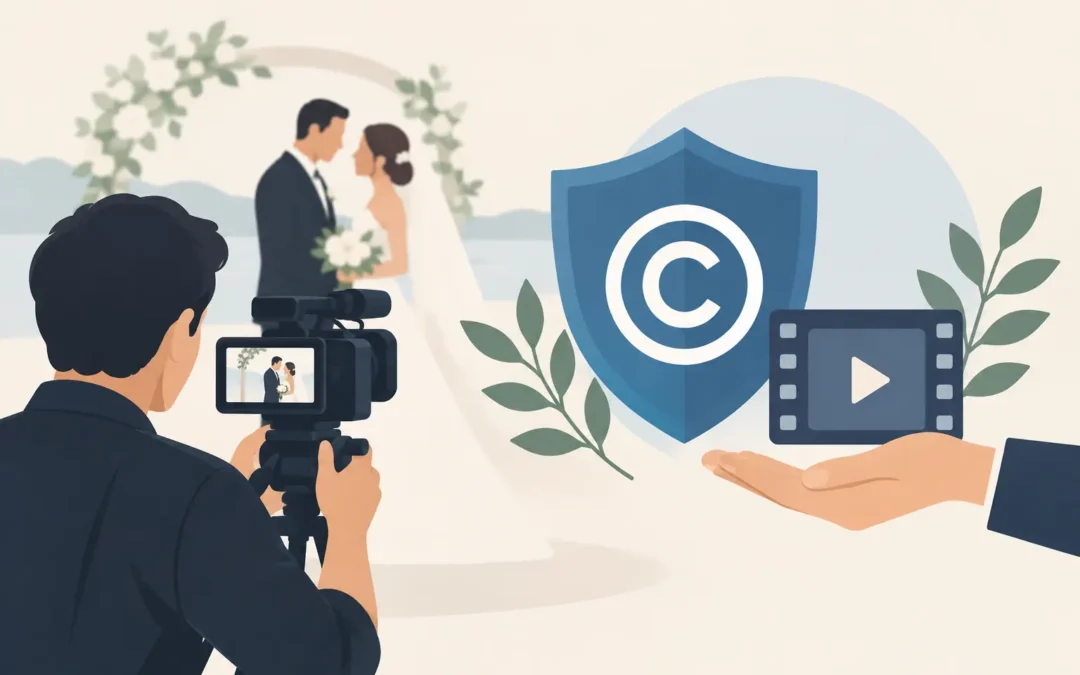
The confetti has settled, the speeches have made everyone laugh and cry, and your wedding film arrives ready to transport you straight back to that feeling. Then a surprisingly common question pops up: who actually owns it? Wedding film copyright can sound rather formal for something so personal, but understanding it before you book helps avoid awkward surprises later.
For most couples, the aim is simple. You want to watch your film on the sofa, share it with the people you love and keep it safe for every anniversary to come. A clear agreement gives you exactly that, while also respecting the creative work behind the camera.
What wedding film copyright means in the UK
In UK law, copyright usually arises automatically when an original piece of work is created. There is no form to fill in and no small copyright symbol needed. A wedding film is a creative work, so copyright protects the footage and the finished edit from being copied, sold or used without permission.
The key distinction is between owning copyright and having permission to use the film. They are not always the same thing.
In many cases, the filmmaker retains the copyright in the film they create. This is standard practice across creative industries, whether you commission a film, photographs, illustrations or music. Booking and paying for a wedding videographer does not automatically transfer their intellectual property rights to you.
That should not feel cold or restrictive. It simply means the filmmaker remains able to protect their work, maintain its quality and control commercial use. Meanwhile, your contract should set out a licence that lets you enjoy the film as your personal family memory.
What you should be able to do with your wedding film
A well-written wedding film agreement will usually give you a broad personal-use licence. In real life, that means you can watch and download the final films, share them privately with family and friends, post a teaser or highlights film on your personal social media, and make sensible personal backups.
The exact wording matters. Some filmmakers deliver films through an online viewing platform, while others also provide downloadable files or a keepsake USB. Neither approach is automatically better. What matters is knowing how long the film will be hosted, whether download access is included and how you should store your own copy.
Personal sharing is very different from commercial use. You would normally need specific permission to give your film to a brand, wedding venue or paid publication, use it in advertising, or sell footage to another party. Equally, a filmmaker should not assume they can use your story in marketing without covering that in their contract.
For couples who value privacy, this is an essential conversation rather than a tiny detail in the small print. You may be delighted for your filmmaker to share a beautiful 60-second teaser. Or you may prefer no online sharing at all. Both choices are completely valid, and the best time to make them is before the wedding day.
A quick word on social media
Posting your own highlights film is usually covered by personal use, but music can complicate the picture. The track that makes your film feel cinematic may be licensed specifically for use within a wedding film and its intended viewing platform. That licence may not extend to every social network, every country or every form of paid promotion.
Your filmmaker should use properly licensed music and explain any sharing limitations. If a platform mutes audio or restricts a post, it is often about the platform’s own music policies, not because you have done anything wrong. It is still worth following the guidance you are given, particularly if you plan to upload the full film rather than a short teaser.
Does the videographer own the raw footage?
Usually, yes. Raw footage is part of the filmmaker’s creative output and is commonly retained by them. It also has very different value from a finished wedding film. Hours of unedited clips can include repeated takes, shaky moments, technical tests and incomplete sequences that were never intended to represent the finished story of your day.
Some filmmakers offer raw footage as an optional extra, while others do not supply it at all. There is no universal rule. If having every recorded moment matters to you, ask before booking, not after delivery. Find out what “raw footage” actually means in that supplier’s process, how it will be supplied, and whether it includes usable sound.
It is also sensible to ask how long footage is retained after the final films are delivered. Professional filmmakers often keep project files for a period, but storage has a real cost and no one can promise to archive every wedding indefinitely. Download your final films promptly and keep at least two copies in separate places.
Why copyright protects the quality of your film
Copyright is not only about stopping misuse. It gives a filmmaker the ability to protect the look, sound and integrity of their work.
Imagine a highlights film being downloaded, re-edited with unlicensed music, heavily filtered or cut down in a way that no longer reflects the original story. If it is then shared as the filmmaker’s work, it can affect their reputation. Retaining copyright helps prevent that confusion.
This is why most agreements do not allow third parties to alter the finished film without consent. If you would like an additional cut for a family member, a vertical version for social media or a small change to a title card, ask. A good filmmaker will always be clear about what is possible, what is included and what may involve extra editing time.
At Smart Captures Wedding Films, the focus is on creating a timeless film that feels like your day, not a production you have to perform in. Clear boundaries around usage help keep that film personal to you while protecting the care, craft and music licensing that bring it to life.
Questions to ask before you book
You do not need to become an expert in intellectual property before choosing a wedding videographer. You simply need a contract written in plain English and the confidence to ask a few direct questions. Before paying your booking fee, check:
- Who retains copyright in the footage and finished films?
- What personal-use rights do we receive, including downloads and social sharing?
- Can we opt in or out of having our film used on your website and social channels?
- What music licences are used, and are there any restrictions on posting?
- Are raw files available, and how long are final films and project files retained?
The answers reveal quite a lot about a supplier’s professionalism. Clear, calm explanations are a good sign. Be cautious of vague promises such as “you own everything” if the agreement does not spell out what that means, especially where licensed music is involved.
When you may need something more than standard permission
Most weddings fit neatly within a standard personal-use licence. There are exceptions, though. Perhaps your celebration includes a high-profile guest, a commercial venue partnership, a content creator collaboration or a plan to feature the film in a business campaign. In those circumstances, mention it early.
A videographer may be able to offer extended usage rights, but this may involve further permissions and costs. Music licensing, guest privacy and brand approvals can all affect what is possible. It depends on the project, and getting it right upfront is far easier than trying to secure retrospective permission once the film is finished.
If you are having a destination wedding, the same principle applies. UK copyright rules and your contract remain highly relevant, but local venue rules, drone permissions and music licences may add further considerations. Your filmmaker should be open about those practicalities from the start.
Keep the conversation as personal as the film
Your wedding film should feel like a warm, vivid return to the day you promised forever. Copyright does not take that away. With a thoughtful contract, it protects the creativity behind the film while giving you the freedom to treasure, share and revisit the moments that matter most.
Before you sign, read the usage clause together, ask anything that feels unclear and choose a filmmaker whose approach makes you feel looked after. That little bit of clarity leaves far more room for the good fun, the happy tears and the brilliantly unrepeatable moments still to come.