
You will probably look at your wedding photos hundreds of times. You will frame them, post them, tuck them into albums, and glance at them on ordinary Tuesdays when you want to remember how good it all felt. But when couples start weighing up wedding videography vs photography, the real question is not which one is better. It is what kind of memory you want to keep.
Photography and videography do very different jobs, even when they are capturing the same moment. A brilliant photographer can freeze the joy on your faces during confetti, the look your mum gives you before the ceremony, and the candlelight during dinner. A brilliant videographer can preserve the shake in your voice during vows, the cheers after your first kiss, the music, the laughter, the movement, and all the little bits of atmosphere that disappear as quickly as they happen.
If you are planning a stylish wedding in Somerset, Bath, Bristol or anywhere across the South West, it is worth understanding what each one truly gives you before you decide where your budget goes.
Wedding videography vs photography – what is the real difference?
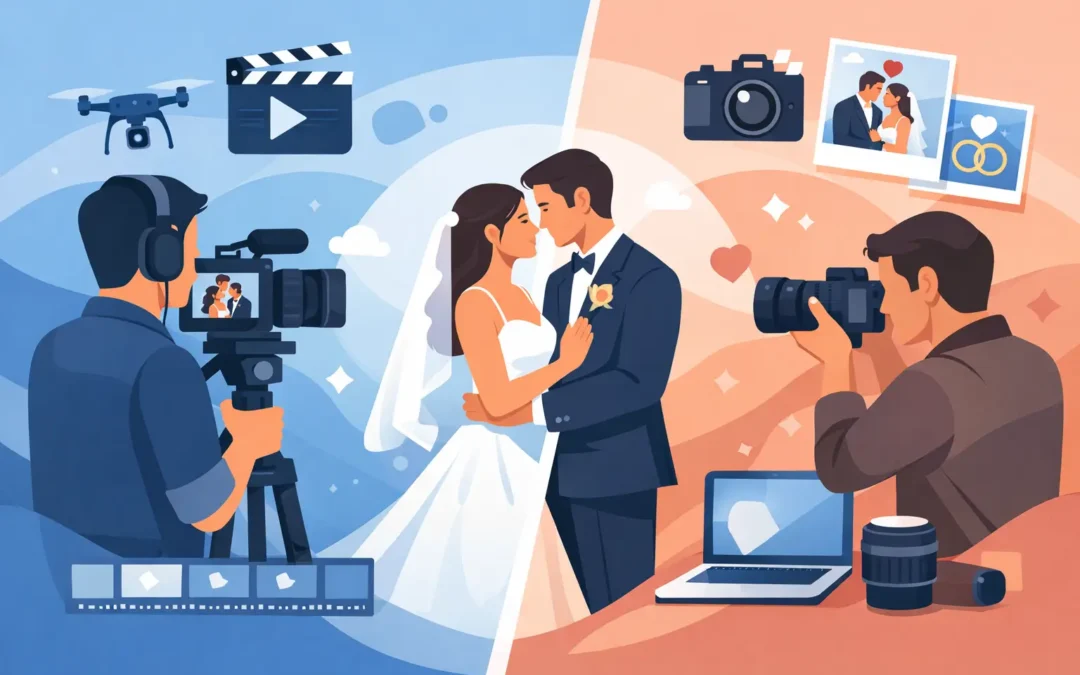
The simplest answer is that photography captures how your wedding looked, while videography captures how it felt.
That sounds neat, but it is not the whole story. Wedding photography creates single, powerful frames. It turns fleeting moments into images you can hold onto forever. The best photographers are brilliant at composition, light, timing and emotion. They can make a busy room feel calm, a windswept portrait feel elegant, and a split second feel timeless.
Wedding videography works with movement, sound and pacing. It builds a narrative. Instead of one image of your partner seeing you for the first time, you get the breath before it, the smile as it lands, and the reaction that follows. Instead of a still of your speeches, you hear the voice cracks, the laughter, the applause, and the off-the-cuff moments that no one planned but everyone remembers.
That is why comparing wedding videography vs photography as though they are interchangeable usually misses the point. They overlap, but they are not replacements for one another.
What photography does beautifully
Photography is still the foundation for most couples, and for good reason. Photos are immediate and easy to revisit. They work on your walls, in your thank-you cards, on your phone, and in albums that become part of family life. A single image can become the one your children and grandchildren know best.
It is also often the easier medium to share day to day. You are more likely to print a photograph than sit down and watch a full film every week. And if you love editorial styling, elegant portraits and beautifully composed details, photography gives those moments a kind of stillness that feels refined and classic.
There is also something powerful about the pause a photograph creates. It lets you stop and study a look, a hand squeeze, a grin across the table. For décor, fashion details, family groups and those iconic just-married portraits, photography is irreplaceable.
What videography adds that photography cannot
Video gives you your people back in motion.
You’ll hear voices exactly as they were. Hearing your dad’s speech, your best friend’s laugh, your partner’s vows, and the noise on the dance floor when everyone stops trying to look cool. You see hugs unfold rather than just the moment they began. All of a sudden you catch the tiny things you missed completely because wedding days move fast.
This is often the part couples do not fully appreciate until after the day. Once the dress is packed away and the flowers are gone, sound becomes incredibly valuable. The voice of someone you love. The room filling with applause. The way the ceremony actually felt, not just how it appeared in pictures.
A cinematic wedding film also helps tie the whole day together. It can bring the morning nerves, the ceremony, the speeches, golden hour portraits and the evening energy into one emotional story. That is very different from simply documenting events in order. Done well, it feels elegant, natural and full of life rather than staged.
Wedding videography vs photography when budget matters
For many couples, this is where the decision gets difficult. If you can only book one, which should it be?
The honest answer is that it depends on what matters most to you. If your priority is printed keepsakes, family albums, artwork for your home and beautifully curated stills, photography may feel like the more essential choice. If your priority is reliving the atmosphere, voices and emotion of the day in a way that feels immersive, videography may matter more than you first thought.
There is no universally correct answer, and anyone claiming otherwise is oversimplifying it.
That said, couples often underestimate how much they will value film later. Before the wedding, photos can feel more obvious because we are used to seeing them everywhere. After the wedding, many couples realise the moving, speaking, laughing version of their day is what transports them right back.
If your budget allows for both, that is usually the sweet spot. You get the visual elegance of photography and the emotional depth of film, without asking one medium to do a job it was never meant to do.
Do you need both for a luxury wedding experience?
Not because luxury means having more suppliers for the sake of it. It is because a thoughtfully planned wedding often has layers that deserve to be preserved properly.
If you have invested in a beautiful venue, meaningful styling, music, heartfelt speeches and a celebration that reflects your personalities, a mixed visual record makes sense. Photography preserves the design and key portraits. Videography preserves the energy in the room and the personality of the people in it.
For couples planning a relaxed but polished day, this combination tends to feel especially valuable. You are not just documenting a schedule. You are preserving the atmosphere you worked so hard to create.
How photography and videography work together
A common worry is whether having both will make the day feel crowded or intrusive. That is a fair concern, especially if you want things to feel natural.
When both suppliers are experienced and aligned in style, the opposite is usually true. A good team knows how to read the room, share space, and keep things calm. Documentary coverage should never feel like a performance. It should feel like you are free to enjoy the day while key moments are captured with care.
This is one reason style matters as much as skill. If you want relaxed, authentic coverage, choose people who genuinely work that way. A calm photographer and a personable videographer can blend into the rhythm of the day, guide when needed, and step back when the moment should breathe.
Questions to ask yourself before you choose
Rather than asking whether video or photo is more important in general, ask what kind of memories matter most to you personally.
If hearing your vows again would mean everything, that points strongly towards video. If you have always imagined a beautiful wedding album on your coffee table, photography may be your starting point. However, if you are close with family members and know their voices and mannerisms will be priceless to have in years to come, videography becomes much more than a nice extra.
It also helps to think about your personalities. Some couples imagine they will feel awkward on camera and assume that means skipping film. In reality, the right videographer makes a huge difference. Relaxed documentary filming should feel easy, unobtrusive and, honestly, good fun.
For couples who want that balance of elegance and ease, Smart Captures Wedding Films focuses on cinematic storytelling with a relaxed presence, which is often exactly what helps people forget the camera and enjoy themselves.
The best choice is the one you will feel later
When people discuss wedding videography vs photography, they often do it like a budgeting spreadsheet. Practicality matters, of course, but this decision is also emotional. You are choosing how your future selves will revisit one of the biggest days of your lives.
Photos will give you beautiful still memories to hold onto. Film will give you movement, sound, atmosphere and feeling. One is not more valid than the other. They simply preserve different truths.
If you are torn, imagine yourselves ten years from now. Not while planning, but afterwards. Imagine opening an album. Then imagine hearing your vows again, seeing people you love laughing, and watching the day unfold with all its energy and warmth. The answer usually becomes clearer there.
Choose the kind of memory that feels most like you, and if you can, give yourselves both.