
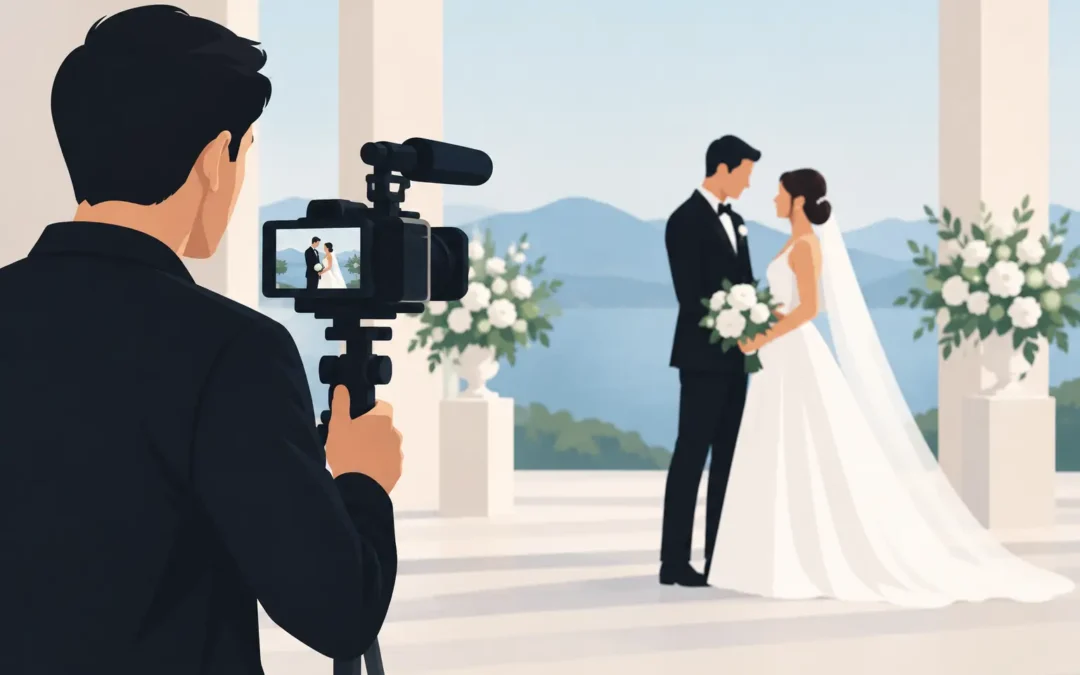
A black-tie invitation sets a deliciously high bar. The dress code promises candlelight, champagne, sharp tailoring and a room full of people who have made an occasion of it. A black tie wedding film example should reflect that polish, but it should never feel stiff. The best films hold onto the elegance while leaving room for the nervous laughs, the spontaneous hugs and the properly good party that follows.
For couples planning a stylish celebration in Somerset, Bath, Bristol or further across the South West, it helps to know what separates a film that simply records a black-tie wedding from one that lets you feel the atmosphere all over again.
What a Black Tie Wedding Film Example Should Show
The opening moments usually do a lot of quiet work. Rather than racing through a checklist of details, an elegant wedding film creates a sense of place: the texture of a dinner jacket, a bow tie being straightened, shoes on a sweeping staircase, flowers being placed on the tables and the first guests arriving at a beautiful country house or city venue.
These details matter because they establish the mood you spent so much time creating. But they work best in context. A close-up of a champagne tower is lovely; a champagne tower surrounded by your friends, with the room beginning to buzz, tells a fuller story. Cinematic filming is not just about beautiful shots. It is about giving those shots meaning through real moments and natural sound.
For a black-tie day, the visual style should feel refined without becoming overly formal. Think considered composition, flattering light and elegant movement, balanced with a documentary eye for the things no one could plan. Your dad seeing you ready for the first time. Your best friend attempting not to cry during the ceremony. The laughter that breaks out when a speech takes an unexpected turn.
The Ceremony Needs Space to Breathe
Black-tie weddings often have a wonderfully anticipatory feel before the ceremony. Guests arrive looking incredible, music fills the space and there is a genuine sense that something special is about to happen. A good film catches that build-up, then knows when to step back.
During the ceremony, discreet multi-camera coverage means the important reactions can be captured without a filmmaker becoming the main character. The vows, readings and applause deserve to be heard clearly, not buried beneath a music track. Years from now, it may be the slight shake in your voice or the way your partner says your name that brings the whole moment rushing back.
This is where a relaxed approach makes a real difference. You should not feel as though you are performing your ceremony for the camera. You should be able to be fully present with each other, confident that the meaningful moments are being covered with care.
Elegant does not mean overly posed
There is absolutely a place for a few beautifully filmed portraits, particularly if you have chosen a venue with striking architecture, gardens or dramatic views. A short stroll after the ceremony can give you a chance to breathe together while your filmmaker captures those cinematic, editorial-feeling shots.
The trade-off is time. A long, heavily directed shoot can pull you away from your guests and interrupt the flow of the drinks reception. For most couples, a relaxed ten or fifteen minutes is enough. The most timeless footage often comes from simple prompts rather than rigid posing: walk together, take in the view, have a quiet word and enjoy the fact that you are finally married.
The Sound Is What Makes It Personal
If you are watching a black tie wedding film example, pay close attention to what you can hear as well as what you can see. Beautiful visuals will always impress, but spoken words are what make the film unmistakably yours.
A heartfelt voiceover from the vows can carry a highlights film from the calm of the morning to the energy of the evening. A line from a father-of-the-bride speech, a burst of laughter from the best man or the cheers after the first kiss gives the film emotional texture. These are the details photography cannot preserve in the same way.
This does not mean every second needs music, narration or a dramatic soundtrack. A little natural atmosphere goes a long way: the sound of guests gathering outside the church, glasses clinking at dinner, applause rolling around a candlelit room and the first few notes of the band starting up. Those moments make a film feel lived-in rather than polished within an inch of its life.
A Black-Tie Reception Should Feel Like a Celebration
The reception is where the formality softens and personalities take over. It is the point at which a black-tie wedding becomes less about the dress code and more about the people you chose to celebrate with.
A strong wedding film captures the transition. Perhaps it is the newlyweds making an entrance to dinner, the room reacting to a brilliant speech, or guests spilling out into the evening air between courses. If there is a drone opportunity, it should add scale and a sense of setting, not appear just because it is available. A sweeping aerial shot can be breathtaking at the right venue and in the right conditions, but the emotion always matters more than the gadget.
When reviewing films, look for reaction shots. Are parents, friends and grandparents part of the story, or does the film only focus on the couple? The atmosphere of a wedding lives in those faces. A luxurious celebration can look immaculate, but it is the joyful chaos of a packed dance floor and the warmth between generations that makes it memorable.
Let the evening have some energy
Many black-tie weddings begin with classic sophistication and end with ties loosened, shoes abandoned and everyone singing far louder than intended. Your wedding film should be able to move with that change in pace.
This is where an energetic, personable filmmaker is worth their weight in gold. They can blend into the dance floor, catch the big moves, work around the band or DJ and still keep everything looking stylish. You do not need a staged party sequence. You need someone who is comfortable in the middle of it all and knows when the vibes are about to peak.
How to Judge Whether a Film Feels Like You
A beautiful sample film is a great starting point, but do not judge it purely by the venue, the weather or whether the couple look like fashion campaign stars. Ask yourself a simpler question: can I feel the day?
Notice whether the filmmaker captures different moods. There should be calm in the preparations, anticipation before the ceremony, intimacy in the vows, warmth during the speeches and proper momentum once the party begins. A film with only slow motion and music may look gorgeous, yet miss the personality of the day. Equally, a film packed with action but no breathing room can lose the sense of elegance a black-tie celebration deserves.
It also helps to consider the kind of coverage you want to keep. A highlights film is brilliant for reliving the feeling and sharing with loved ones. A teaser can give you that immediate little hit of excitement soon after the day. Full ceremony and speeches films preserve the complete words and moments that deserve more than a few seconds in a montage. For many couples, having both the cinematic story and the full records offers the best balance.
The Feeling You Want to Keep
The finest black-tie wedding films do not make a day look grander than it was. They reveal the grandeur that was already there, then make space for the human bits that made it yours.
When you choose your filmmaker, look for someone whose work feels elegant but never distant, cinematic but never contrived. If their films let you hear the laughter, see the glances and feel the room come alive, you are not just choosing a lovely video. You are choosing a way back to one extraordinary day, whenever you fancy returning.