
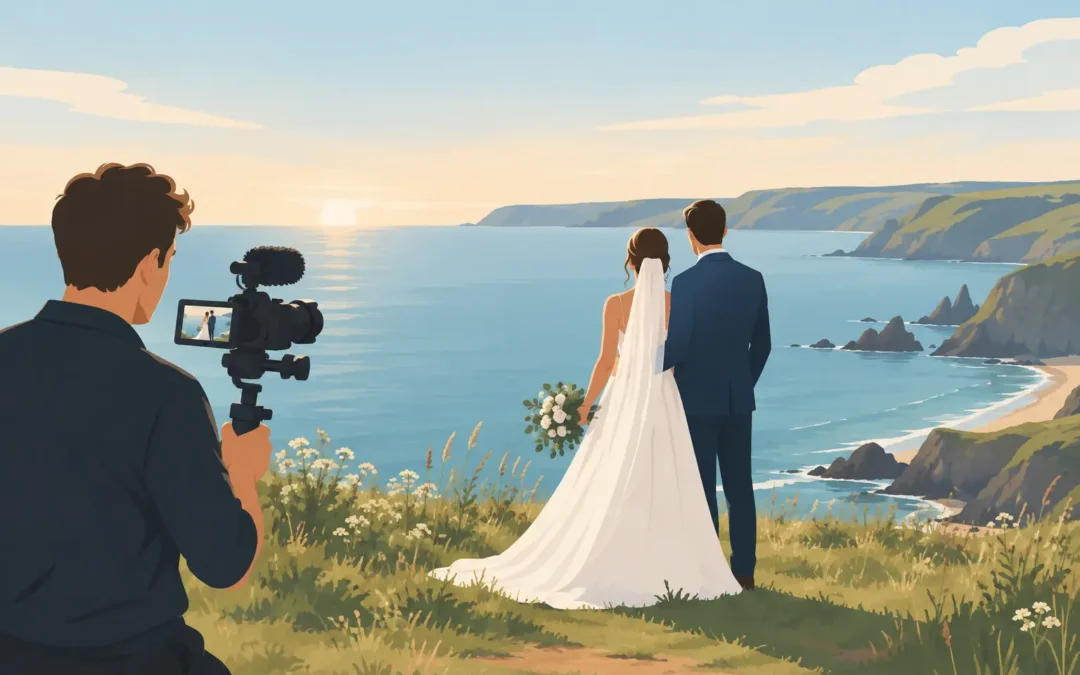
The wind catches your veil on the clifftop, guests are laughing over glasses of fizz, and the sea is doing what it does best in the background. Devon coastal wedding videography is not simply about finding a pretty view. It is about holding on to the movement, sound and feeling of a day that can pass far too quickly.
A coastal wedding has its own energy. There is salt in the air, changing light, a little unpredictability and often a brilliant sense that everyone has escaped ordinary life for the weekend. A beautifully made film lets you return to that feeling properly: the nervous breath before the ceremony, the crack in a parent’s voice during a speech, the applause as you walk back up the aisle, and the full-on dance floor vibes later on.
Why the Devon coast makes wedding films feel so alive
Devon gives you a wonderfully varied backdrop. One moment, you may be exchanging vows with sweeping sea views behind you; the next, your guests could be tucked into a candlelit barn, a characterful hotel or a marquee glowing after sunset. The contrast makes for a film with real texture and pace.
But the coast should never become the main character at the expense of the people in the frame. The best wedding films use those big views to establish the atmosphere, then come close for the moments that matter most: hands squeezing during the ceremony, friends wiping away tears, children charging across the lawn and the look you give each other when you finally have a quiet minute alone.
That balance is what makes a wedding film feel cinematic without becoming overly polished or distant. It should be elegant, yes, but it should still feel unmistakably like your day.
Devon coastal wedding videography needs a relaxed approach
Couples rarely want to spend their wedding being directed from one pose to the next. Nor should they have to. A relaxed documentary approach leaves room for the real good stuff – the unplanned hugs, the brilliant speech reactions, the slightly chaotic group shots and the moments you did not even realise were happening.
This does not mean leaving everything to chance. Great filming is thoughtful and well prepared. It means knowing when to hang back and observe, when to move into the right position before a key moment happens, and when to gently suggest five minutes together at golden hour because the light is too good to miss.
The aim is for you to enjoy your guests, your meal and your party, rather than feeling as though you are on a production set. You should remember your filmmaker as a calm, friendly presence who brought great energy, got on with everyone and helped the day flow.
The details that become more meaningful over time
Photography captures a fraction of a second beautifully. Film gives you the voices, movement and atmosphere around it. Years from now, hearing the sea behind your vows or listening back to the laugh that filled the room during the best man’s speech can take you straight back.
That is why audio deserves as much attention as the imagery. Clear recordings of your ceremony and speeches give your finished film emotional depth, while snippets of natural sound – gulls in the distance, cheers after the confetti, music drifting from the reception – make it feel lived-in rather than staged.
Working with Devon’s weather, light and wind
The coastal weather is part of the charm, even when it refuses to follow the forecast. Bright sunshine, mist, a soft drizzle and dramatic clouds can all look incredible on film. The key is choosing a videographer who sees changing conditions as a creative opportunity rather than a problem.
A moody sky can add drama to the opening of your film. Wind can bring movement to dresses, flowers and the landscape. Rain may mean moving portraits under cover, but it can also create intimate, atmospheric footage through windows or beneath umbrellas. The most important thing is that you never feel your day has been spoiled because conditions changed.
There are practical considerations, of course. Strong wind can affect sound, so good audio equipment and careful microphone placement are essential. A drone can create breathtaking establishing shots of Devon’s coastline, but it is always weather-dependent and subject to airspace restrictions, venue rules and the safety of everyone around you. It is a brilliant addition when it works, not a promise worth putting ahead of the people and moments on the ground.
Plan for light, but do not plan every second
If you would love a few cinematic coastal shots, it is worth building a small pocket of time into your schedule. Often, 10 to 15 minutes around golden hour is plenty. This is not about whisking you away from your own party for ages. It is simply a chance to breathe, take in the fact that you are married, and have a little time together while the evening light works its magic.
The timing depends on the season, the venue’s setting and the weather on the day. In summer, sunset may arrive late, while spring and autumn can bring softer light much earlier. A flexible plan will always serve you better than a rigid shot list.
Choosing a film style that will still feel right in decades
Trends move quickly. Your wedding film should not feel trapped in a particular social media moment. That does not mean it needs to be slow or overly traditional. It means choosing a style with enough personality to feel exciting now, while keeping the storytelling and editing timeless.
A cinematic highlights film can capture the energy and emotion of the day in a beautifully watchable way. A shorter teaser is perfect for sharing with friends and family who cannot wait to see a glimpse. Full ceremony and speeches films preserve the words that matter, without forcing you to choose between an artistic edit and the complete memories.
Multi-camera coverage can be particularly valuable for ceremonies and speeches. It gives your film room to show both the person speaking and the reactions that make their words land. When your mum starts crying halfway through a reading, or your friends lose it at a joke in the speeches, those responses are part of the story too.
At Smart Captures Wedding Films, the focus is on combining that polished, cinematic finish with natural storytelling. The final film should feel like the very best version of your memories, not a version of your wedding that never really happened.
How to help your videographer capture the real atmosphere
You do not need to perform for the camera. In fact, the less you worry about it, the better your film is likely to feel. Be present with each other, let your guests enjoy you and give yourselves permission to have a proper celebration.
A few simple conversations before the day can make a huge difference. Share the parts of the day that mean the most to you, whether that is a private letter exchange, a grandparent attending, a live band you have obsessed over, or the fact that all your university friends are finally in one room again. These details help shape where attention should go.
It is also helpful to let key people know that the ceremony and speeches are being recorded. Ask readers and speakers to take their time, hold the microphone properly if one is provided, and resist speaking directly into a bouquet or folder. Tiny practical touches protect the moments you will want to replay.
A film that brings you back to the coast
Your Devon wedding will be full of things you cannot schedule: the sudden cheer from your friends, your partner’s expression when they see you, the sea breeze arriving at exactly the right moment, and the wild joy of everyone dancing at the end of the night. Those are not filler moments. They are the heart of it.
Choose a wedding filmmaker who understands the difference between filming a beautiful location and telling the story that unfolds within it. Then, when you press play years later, you will not just see the Devon coast. You will feel the warmth, noise, nerves, love and brilliant good fun of being there together.