
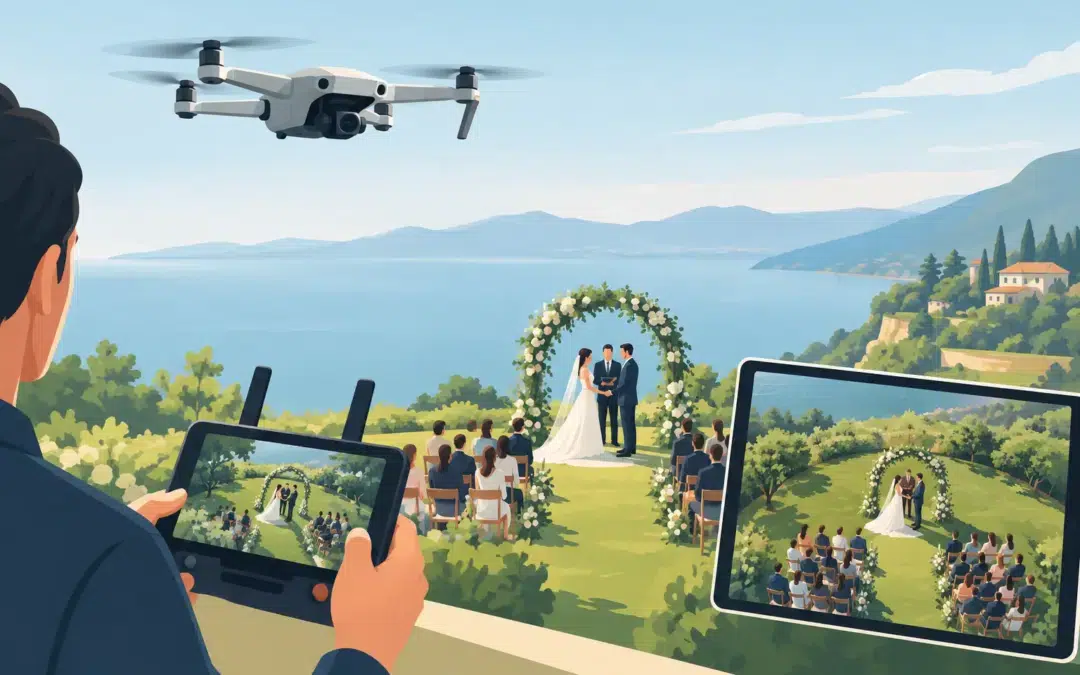
A drone shot should never feel like a box to tick. At its best, it gives your wedding film that lovely sense of place: the sweep of your country house venue, the coastline beyond your ceremony, the guests gathered on a sunlit lawn, or the two of you taking a quiet breath away from the buzz. Knowing how to include drone wedding footage is really about choosing those moments with care, so the film feels cinematic without taking you away from the celebration.
Start with the feeling, not the aerial shot
It is tempting to picture sweeping overhead footage as the main event, especially if you have chosen a beautiful South West venue. But drone coverage works best as part of the story, rather than a series of impressive clips dropped in for the sake of it.
Think about what you want your film to hold on to. Perhaps it is the grandeur of a Bath manor, the wild landscape around a Devon barn, the sea air at a Dorset celebration, or the cosy atmosphere of a Somerset estate in autumn. Aerial footage can establish that setting in seconds, giving the emotional, close-up moments that follow even more context.
The most timeless wedding films balance scale with intimacy. Your partner’s reaction at the aisle, the laughter during speeches and the movement on a packed dancefloor will always carry the heart of the day. Drone shots add the atmosphere around those memories. They show where it all happened and the energy of everyone coming together.
How to include drone wedding footage in your timeline
The key to relaxed drone footage is allowing for it without making the day revolve around it. A good filmmaker will work around your schedule, not start pulling you away for lengthy staged scenes when you would rather be with your guests.
Often, the best time for a quick couple shot is during your portrait window, when you are already spending a few minutes together. If the weather and venue allow, just five or ten minutes can be enough to capture a beautiful wide shot of you walking across the grounds, standing beneath the venue’s architecture, or taking in the view. There is no need to pose rigidly. A gentle walk, a hand held, a little laugh between you – that is usually where the magic lives.
Drone footage can also be captured while you are busy elsewhere. Exterior establishing shots of the venue, arriving guests from a suitable distance, or the wedding party gathering on the lawn can often be filmed without asking anything extra of you. This is ideal if you want the cinematic feeling but do not want your day broken up by production.
Golden hour is wonderful when it happens, particularly for summer weddings with open views. Still, it should never become a source of pressure. If sunset falls during dinner, speeches or your first dance, staying present for those moments matters far more than chasing one aerial shot. The best plan is flexible: make use of the light if it fits naturally, and let the rest of the day unfold.
Moments that tend to work beautifully from above
Aerial coverage is especially effective for the opening of your highlight film, where it can introduce the venue and surrounding landscape. It can also be lovely after the ceremony, once guests have spilled outside with drinks in hand and the whole place feels alive.
Some couples enjoy a group wave or confetti-style gathering filmed from overhead, although this needs clear coordination and enough space to do safely. Others prefer something much more understated: a single wide shot of the two of them crossing the gardens, or the venue glowing in the evening light. Neither approach is better. It depends on whether your day is full of big, joyful energy or quieter, romantic moments – and most weddings are a bit of both.
Check your venue before making plans
A gorgeous venue does not automatically mean drone flying is permitted. Many historic properties, private estates and venues near airports or controlled airspace have restrictions. There may also be concerns around livestock, neighbouring homes, wildlife, public footpaths or the comfort of other guests.
Ask your venue early whether drone filming is allowed, and whether they have conditions around where it can take off and land, the times it may be flown, or any areas that are off limits. Your videographer should also make their own checks before the day. Safe professional flying in the UK means following Civil Aviation Authority rules, assessing the location and conditions, and making sensible decisions about people nearby.
It is worth remembering that a venue’s permission and aviation rules are separate things. Even when a venue is happy for a drone to be used, weather, airspace restrictions or activity on the day may mean it is not safe or legal to fly. That is not a failed plan. It is simply part of putting people first and keeping the experience enjoyable for everyone.
Choose a filmmaker who knows when not to fly
The most polished drone footage comes from good judgement, not from flying at every opportunity. A drone can be an amazing creative tool, but it should never hover over your ceremony, distract guests during emotional vows, or make anyone feel watched when they are trying to relax.
Your filmmaker should be able to read the room. During a quiet exchange of vows, the natural sound of your voices is far more valuable than an aerial angle. During the drinks reception, a short flight may be perfect if it can be done discreetly. During speeches, the focus belongs on the people speaking and the reactions around the room.
This is also why sound matters so much. Drone footage does not carry the emotional audio that makes a wedding film personal. It is the picture that helps transport you back to the setting, while your vows, speeches, laughter and music tell the deeper story. Used thoughtfully, the two complement each other beautifully.
Have a weather-friendly plan
British weather has a mind of its own, and drones are more affected by wind and rain than cameras on the ground. A clear forecast at breakfast can turn into strong gusts by mid-afternoon, especially at exposed coastal or countryside venues.
The best approach is to see drone coverage as a wonderful addition, rather than the one element your film depends on. If flying is not possible, a skilled videographer can still create movement, scale and atmosphere with ground-based cinematic shots, multiple camera angles and carefully captured natural sound.
Cloudy weather can also be more flattering than couples expect. Soft light often looks elegant on camera, and mist, dramatic skies or a little wind through the trees can give your footage real character. Your wedding does not need perfect sunshine to feel visually special. It needs to feel like your wedding.
Keep it personal and properly you
Before the day, tell your filmmaker what drew you to the venue. Maybe you chose it for the rolling fields, the old stone courtyard, the woodland ceremony spot or the fact that it is close to where you first lived together. Those details help shape what is worth capturing from above.
It is also useful to share your comfort level. Some couples love a dramatic, editorial-style reveal; others want drone footage that is barely noticed, woven gently between documentary moments. At Smart Captures Wedding Films, the aim is always to keep things relaxed and good fun while creating a film with real emotional weight. The drone is there to serve the story, not steal the show.
When it is planned with care, aerial footage can make the opening moments of your film feel wonderfully expansive, then bring you right back to the people and emotions that matter most. Choose a team you trust, allow a little flexibility, and let the best shots happen naturally while you get on with having the day of your lives.