
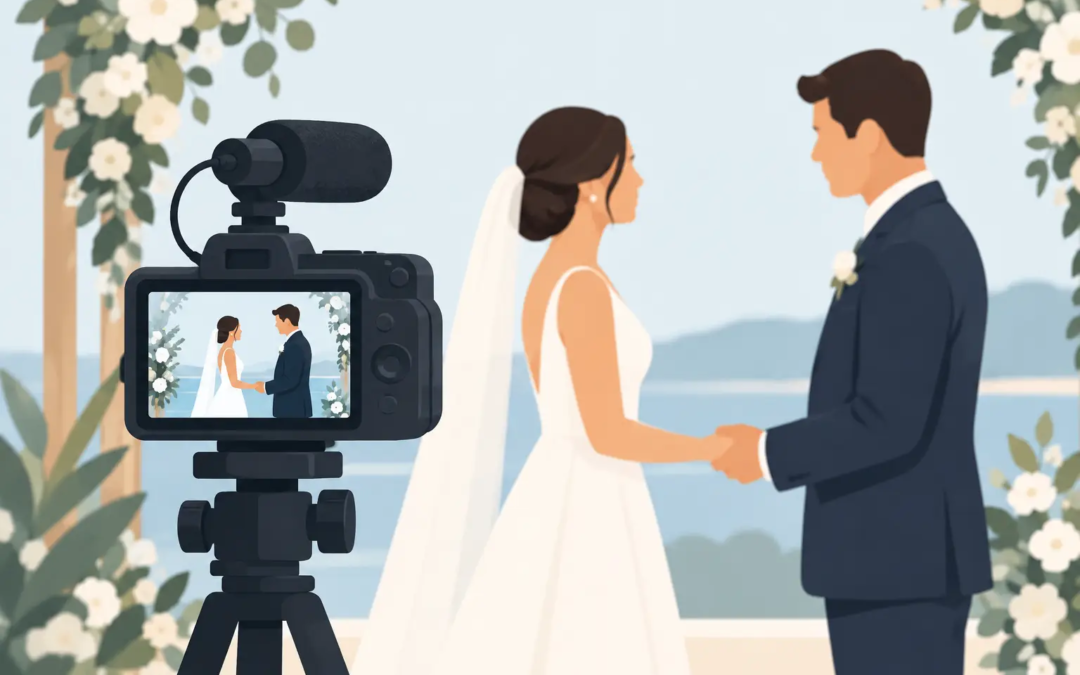
The moment you begin your vows, the rest of the ceremony can feel beautifully blurred. You might remember the nervous laugh, the squeeze of a hand, or the look on your partner’s face – but the exact words can disappear surprisingly quickly. Knowing how to record wedding vows properly means those promises are not just remembered; they are heard again in all their warmth, emotion and personality.
For a cinematic wedding film, clear vow audio is not an optional extra. It is the heartbeat of the story. The words you share can carry a highlights film from lovely to genuinely moving, especially when paired with the quiet anticipation before the ceremony, your guests’ reactions and the atmosphere of the room or outdoor setting.
How to record wedding vows with clear, natural sound
The simplest answer is to use professional audio recorders, placed thoughtfully and backed up properly. A wedding videographer will usually capture vows through small lavalier microphones, often called lapel mics, worn discreetly by the couple, as well as an additional recorder positioned close to the celebrant or registrar. This gives several sources of sound rather than relying on a single microphone.
That backup matters. A microphone can be affected by clothing rustle, a guest stepping in front of a speaker, wind across a country-house lawn, or a legal official moving during the ceremony. Two or three well-managed audio sources allow your filmmaker to use the clearest recording at each moment, while retaining the natural ambience that makes the ceremony feel real.
It is tempting to assume the venue’s sound system will do the job. Sometimes it can be useful, particularly for a large church or a reception with a professional PA, but it should not be the only plan. Venue microphones are designed so guests can hear what is happening, not necessarily to create a clean, intimate recording for film. They may also pick up plenty of room echo, background chatter or handling noise.
Wear a discreet microphone if you can
For most ceremonies, the groom is the easiest person to mic. A small recorder can sit in an inside jacket pocket, with a tiny microphone hidden near the lapel or tie. When the bride or other partner speaks closely, their vows can still be recorded clearly. If your outfits and ceremony format allow it, both partners may be mic’d for even greater consistency.
There is no need for this to feel technical or intrusive. A good videographer will fit microphones quickly and calmly before the ceremony, check they are secure, then leave you to enjoy the morning. You should not be thinking about batteries, buttons or whether you are speaking loudly enough when you are about to get married.
Outfits do affect the approach. A fitted dress, a silk blouse, a kilt, a jumpsuit or a gown without easy access points may make a hidden mic less practical. That does not mean your vows cannot be recorded well. It simply means your filmmaker may favour an unobtrusive recorder near the front, a feed from the celebrant’s microphone, or a combination of alternative placements. The best solution is always the one that protects the sound without changing how you feel in your clothes.
Ask your celebrant, registrar or vicar early
Before the day, let your ceremony lead know that you have a videographer recording audio. Most are very accommodating, particularly when they understand the equipment will be discreet and that your filmmaker will work respectfully around the service.
Rules can vary. Church ceremonies may have clear guidance on where suppliers can stand, while registrars may have restrictions around recording the legal wording. Humanist and celebrant-led ceremonies are often more flexible, but every professional will have their own way of working. A quick conversation avoids awkward surprises just before you walk down the aisle.
Your filmmaker does not need to be beside the couple throughout the ceremony to capture meaningful sound. In fact, relaxed documentary coverage works best when the equipment is planned in advance and the filming stays unobtrusive. The focus remains where it should be: on the two of you.
Plan your vows for the room, not the recording
You do not need to perform your vows for the camera. The most powerful recordings sound like you, including a shaky breath, a small laugh or the moment your voice catches. But there are a few practical choices that will help your words come through.
Bring a written copy, even if you have practised them by heart. A printed card is often easier to hold and quieter than a phone, which can buzz, dim or become awkward to unlock. Use a clear font with generous spacing, and keep the pages or card secure if you are marrying outdoors. Somerset weather can offer glorious sunshine, a dramatic breeze and, occasionally, all four seasons before lunch.
When it is time to speak, take a breath and face your partner rather than looking down for the whole vow. Speak at a natural pace. You do not need to project as though you are on stage, but slowing down slightly gives every line room to land with your partner and your guests.
If you are worried about crying, that is completely normal. Pause when you need to. Those tiny silences are often some of the most emotional parts of a wedding film. There is no prize for getting through your vows without a wobble.
Think carefully about music and outdoor noise
Live music before and after the vows can create brilliant atmosphere, but it helps if musicians know to lower the volume while you speak. The same goes for a playlist playing through speakers. A gentle instrumental track beneath the ceremony may be lovely for guests, yet loud music can make spoken words harder to isolate in the edit.
Outdoor ceremonies have their own magic, from views across the South West countryside to warm summer light in a walled garden. They also bring wind, birds, passing traffic and the occasional enthusiastic lawnmower from a neighbouring property. Professional microphones with wind protection make a real difference, but a sheltered ceremony position is still worth discussing with your venue if conditions look breezy.
Why backup audio is non-negotiable
Wedding days do not offer a second take. That is why experienced wedding filmmakers record in more than one way, test equipment before guests arrive and monitor the setup without making it a big production.
A strong audio plan might include a recorder on the groom, another near the celebrant, and a separate source from the venue’s sound desk where available. The exact setup depends on the venue, ceremony type and clothing, but the principle stays the same: no single point of failure.
It is also worth asking what happens after the ceremony. Great wedding films do not use vows as a standalone clip simply because they were recorded. Your filmmaker listens for the lines that reveal something true about your relationship – perhaps a promise that makes everyone laugh, a story from the early days, or a quiet sentence that brings the whole room to tears. Those words can be woven through preparation footage, the aisle entrance, confetti and those just-married moments afterwards, creating a film that feels personal rather than formulaic.
At Smart Captures Wedding Films, this is part of the approach: elegant visuals matter, but your voices are what bring the day back to life. The sound of a parent laughing during the readings, the applause after your first kiss and the cheers as you walk back down the aisle all belong in the memory too.
A simple conversation to have with your videographer
Before booking or during your planning call, ask how they record ceremony audio, whether they use backup recorders, and if they have worked with your venue or ceremony style before. You can also mention any readings, surprises or personal elements you would especially love to hear in your finished film.
There is no need to choreograph every emotional beat. Just give your videographer the useful context. If your sister is reading a poem you have both loved for years, if your grandad is saying a blessing, or if you have written deeply personal vows, those details help them plan with care.
Your vows deserve more than being faintly audible beneath a beautiful shot. Give them the space, clarity and attention they need, then forget the equipment and be fully present with the person standing in front of you. Years from now, hearing each other say those words in your own voices may be the closest thing to stepping back into that moment.