
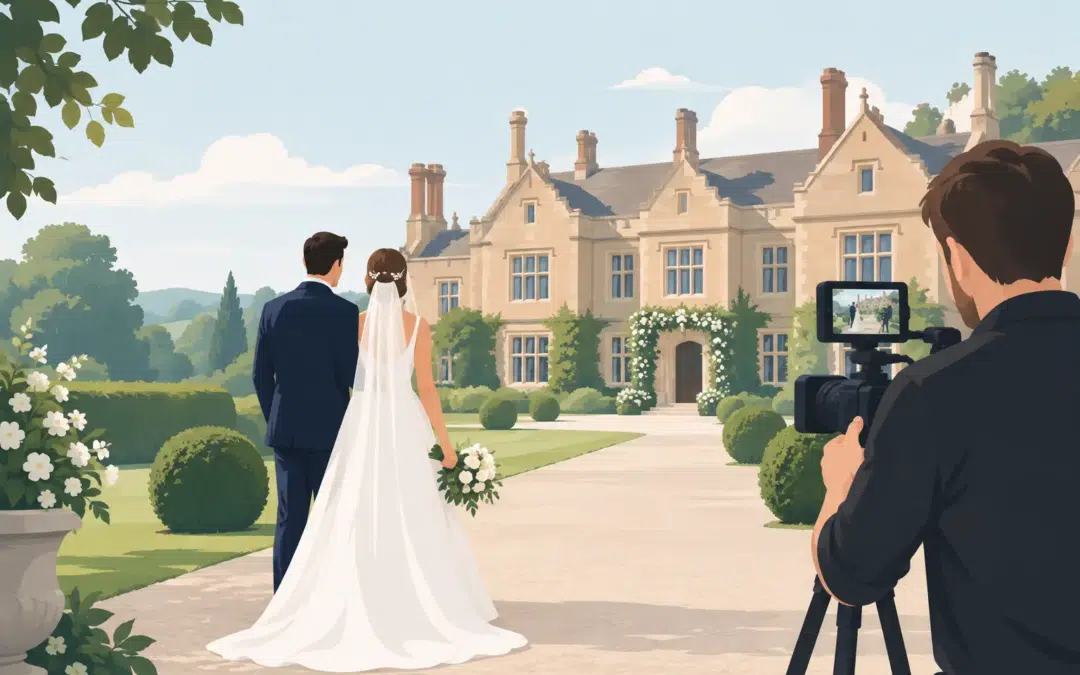
The doors open, music begins to swell, and the hush of a grand hallway suddenly gives way to the people you love most. A manor house wedding film example should make you feel that shift straight away. Not simply show the building, the flowers or the outfits, but bring back the anticipation in the room, the squeeze of a hand and the cheers that follow you out into the grounds.
A manor house is already full of character. It may have sweeping staircases, candlelit dining rooms, stone façades, sculpted gardens and a little bit of British weather adding atmosphere outside. The job of a wedding film is not to turn that into a glossy property tour. It is to place your story right at the heart of it.
What a Manor House Wedding Film Example Should Show
When you are watching wedding films while planning, it is easy to be swept up by beautiful drone shots and dramatic slow motion. Those things can be gorgeous, and at the right moment they absolutely earn their place. But the most useful example shows whether the filmmaker can capture a whole day with feeling.
Look for the natural build-up in the morning. You should see the final touches of getting ready, hear laughter from the room and feel the pace gathering as everyone realises it is nearly time. In a manor house, preparations often happen in elegant rooms full of lovely light and period detail. A thoughtful film uses that setting without making it feel staged.
Then there is the ceremony. Whether you are marrying in the manor itself, a nearby church or an outdoor space in the grounds, this is where sound matters enormously. Your vows, readings and the little reactions from your guests are often the moments that become more meaningful with time. A strong film gives those words room to breathe, rather than layering them over every single shot.
The same applies to speeches. You want the emotional lines, the quick jokes and the laughter that catches everyone by surprise. Multi-camera filming helps preserve the speaker, your reaction and the room all at once, so the finished edit feels immersive rather than like a record from the back of the room.
The Setting Matters, But It Is Not the Story
Manor houses can be wonderfully cinematic, especially across Somerset and the South West. Long driveways create a sense of arrival; gardens offer space for confetti, drinks and portraits; evening light can fall beautifully across the building. Drone footage can establish the scale and setting in seconds, giving your film that elevated opening or breathing space between parts of the day.
Still, a film can look expensive without feeling personal. The difference is in the choices made around the grand views. A good filmmaker balances the wide shots of the venue with close, human details: a parent straightening a lapel, friends seeing you dressed for the first time, a nervous breath before the aisle, muddy shoes after a walk through the grounds.
That balance is especially important if you have chosen a historic venue because you love its atmosphere. You do not need to perform for the camera to make the most of it. The best footage usually happens when you are fully in the moment, enjoying your people and letting the day unfold.
Notice How the Couple Behave on Camera
This is one of the clearest signs when comparing a manor house wedding film example with another. Do the couple look at ease? Are they talking, laughing and moving naturally? Or does every scene feel carefully arranged?
There is nothing wrong with taking a little time for portraits. In fact, a short breather together after the ceremony can be one of the loveliest parts of the day. But it should feel like a chance to connect, not a lengthy photoshoot that pulls you away from your guests.
A relaxed documentary approach leaves room for real life. It catches the big, polished moments, but also the good fun in between: guests finding their seats, children racing around the lawn, a veil caught by the wind, or everyone singing along when the dance floor properly gets going. Those are the bits that tell people what it felt like to be there.
A Film Needs Pace as Well as Pretty Pictures
A wedding day at a manor house has natural changes of mood. Morning is usually intimate and expectant. The ceremony brings focus and emotion. Drinks on the lawn are light, sociable and full of movement. Dinner feels warmer and more relaxed, before the party takes over.
Your film should reflect those changes. If every shot is slow motion with the same piece of music underneath, the day can start to feel flat, however beautiful the images are. If it moves too quickly, the emotion has no chance to land.
A carefully edited highlights film can give you the energy and romance of the day in a few minutes. A longer feature film has room for the story to develop, using vows, speeches and ambient sound to create something more layered. Full ceremony and speeches films serve a different purpose again. They are where the complete words, voices and moments are safely preserved.
For many couples, having both the cinematic edit and the full recordings is the sweet spot. The highlight film is brilliant for sharing with friends and family, while the longer films become the ones you return to on quiet anniversaries, with a glass of something nice and no timetable to follow.
Questions to Ask When Watching Wedding Film Examples
As you compare films, do not only ask whether you like the venue or the music. The following questions will help you see the craft behind the finished piece:
- Can you hear meaningful audio clearly, including vows and speeches?
- Does the film show genuine guest reactions as well as the couple?
- Is there variety in the framing, from the grandeur of the house to small personal details?
- Does the editing feel timeless, or is it led by a passing social media trend?
- Do the people on camera look comfortable and present?
It also helps to ask what is included beyond the highlight film. Coverage time, the number of cameras, drone use where permitted, and delivery of the ceremony and speeches all affect what can be captured. No two wedding days run in exactly the same way, so the right approach depends on your plans, your venue and what you know you will want to relive.
Why Audio Creates the Emotional Return Ticket
Photographs freeze a look. Film brings back a voice.
That might be your partner’s voice as they make their vows, your grandparents laughing during a speech, or the roar from the room after a brilliantly delivered best man line. At a manor house wedding, the acoustics and atmosphere of each room can become part of the memory too: footsteps in a corridor, applause in a panelled dining room, music carrying across the terrace.
These sounds are not background noise. They are the texture of the day. When they are recorded thoughtfully and woven into an edit with care, a film becomes far more than a collection of moving images.
Making Space for the Moments You Actually Want
The best wedding films begin with a day designed for you, not for the camera. Build in a little margin where you can. Leave time to travel between ceremony and reception spaces, plan a short window around golden hour if portraits matter to you, and trust your suppliers to work together rather than competing for your attention.
At Smart Captures Wedding Films, the aim is always to bring calm, positive energy while quietly keeping an eye on the moments worth preserving. That means knowing when to step in for a beautiful shot and, just as importantly, when to stand back and let the moment happen.
A manor house gives your wedding a remarkable backdrop, but the real magic is in the people filling it. Choose a film that lets the setting look elegant, lets the atmosphere breathe and lets you recognise yourselves in every frame. Years from now, that is what will take you straight back.