
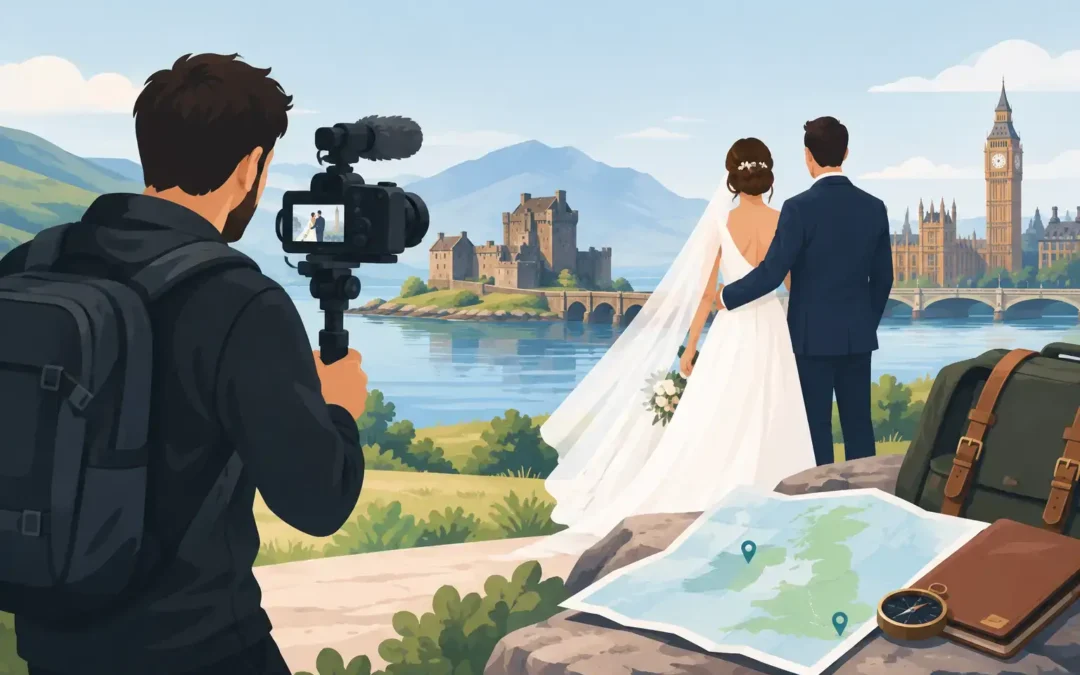
A beautiful wedding film should feel like part of the celebration, not another logistical puzzle to solve. This wedding videographer travel guide is here to make the practical side feel simple, whether you are marrying close to home in Somerset or bringing your favourite people together somewhere farther afield.
Travel need not change the relaxed, natural feeling of your film. With clear planning, it simply means your videographer can arrive calm, prepared and ready to capture the energy in the room – the nervous laughter before the ceremony, your guests singing at full volume and those quiet just-married moments you may not even notice on the day.
Why travel planning matters for your wedding film
Your wedding is not a production set. It is a real, fast-moving day with people arriving, weather changing and brilliant little moments happening at once. When a videographer is travelling to your venue, allowing enough time for the journey helps protect that easy-going atmosphere from the very beginning.
It also gives your filmmaker time to get familiar with the setting. A countryside barn, historic city venue, coastal hotel and marquee celebration all bring different light, access points and sound considerations. Arriving with time to spare means those details can be handled quietly, without taking you away from the people you are there to celebrate with.
For weddings across the South West, distances can look modest on a map but take longer than expected on country roads, especially on a summer Saturday. Bristol traffic, narrow lanes in Devon, a busy Bath city centre or a remote Dorset venue can all affect journey time. A professional will factor this in, but it is always helpful to share the precise venue address, parking information and your final timeline as early as possible.
Wedding videographer travel guide: what to ask before booking
The most useful conversations are straightforward ones. Ask whether travel is included within a certain distance, how additional mileage is calculated and whether an overnight stay may be needed. There is no one-size-fits-all answer because every wedding day has a different start time, location and schedule.
An early bridal preparation film followed by a late-night dancefloor can create a very long day. If the venue is several hours from home, an overnight stay may be the sensible option. That is not about adding unnecessary extras. It is about ensuring your videographer is rested, safe and fully switched on for the moments that matter.
It is also worth asking whether parking, tolls or accommodation are charged separately. Clear pricing upfront is always better than trying to work out details during the final week before the wedding. Premium service should feel reassuring, and that starts with knowing exactly what is covered.
Share the full shape of the day
A simple itinerary is one of the most valuable things you can give your videographer. It does not need to be military-level detailed. A rough outline of preparation, travel to the ceremony, ceremony time, group photos, meal, speeches, sunset portraits and first dance is plenty to begin with.
Do mention if you are getting ready at a different location from your partner, or if the ceremony and reception are at separate venues. These details affect both travel time and the possibility of capturing both sides of the morning. Multi-camera coverage can be brilliant for ceremonies and speeches, but it works best when the plan is known in advance.
If you have a church ceremony, check access and filming rules early. Some churches have specific positions for cameras, restrictions around the altar or guidance on drone use nearby. A good videographer will work respectfully within those boundaries while still preserving the emotion, vows and atmosphere of the moment.
Choosing a venue with filming in mind
You should choose a venue because you love it, not because it is easiest for a camera. Still, a few practical questions can make a real difference to the finished film.
Ask your venue where suppliers can park and whether there is a loading route close to the main spaces. This matters particularly at grand country houses, estates with long driveways and venues in busy town centres. A videographer may be carrying cameras, audio equipment, tripods and lighting, so easy access keeps the arrival smooth and discreet.
Natural light is another lovely thing to consider. Large windows, open doors and a ceremony space with gentle daylight can look incredible on film, but even darker rooms can feel cinematic with the right approach. What matters most is that your venue feels like you. Candlelit dining rooms, moody barns and elegant winter celebrations all have their own magic.
For outdoor weddings, have a wet-weather plan that you genuinely like. Not just one you can tolerate. Rain does not ruin a wedding film – it can bring movement, texture and a wonderfully intimate feeling – but your backup space should still give you room to celebrate comfortably. A packed, dim corner with poor sound is harder to work with than a thoughtful plan B.
Think beyond the ceremony
The best wedding films are built from the whole rhythm of the day. Travel between locations, confetti outside the church, a short walk through the grounds after dinner and the mad energy of the evening party all add texture to your story.
If you are planning couple portraits away from the main venue, tell your videographer. Even ten relaxed minutes at golden hour can give you a chance to breathe together, while creating some of the most timeless, cinematic footage of the day. It should never feel like a lengthy photoshoot. Think of it as a small pocket of calm before you head back to your guests.
How travel affects coverage and cost
Travel costs usually reflect time as well as distance. A venue two hours away may require an earlier departure, a later return or accommodation, particularly if coverage runs into the evening. For a wedding involving multiple locations, there may also be parking costs, tolls or extra time needed to move safely between them.
That said, travel should not make you feel that every minute is being watched. The right package gives your day room to breathe. If you want the anticipation of morning preparations, the full ceremony, heartfelt speeches and the dancefloor in full flow, prioritise generous coverage rather than trying to squeeze everything into a narrow window.
At Smart Captures Wedding Films, the focus is always on creating relaxed, story-led coverage that captures how the day felt, wherever it happens. The practical details are planned carefully in the background, leaving you free to enjoy the good fun in front of you.
Help your videographer capture the atmosphere
A travelling videographer will bring the core equipment needed to film professionally, including cameras, audio kit and, where suitable and permitted, drone equipment. You do not need to become an expert in any of it. Your role is simply to share the parts of the day that mean the most to you.
Perhaps your dad is giving a surprise reading. Maybe your friends have rehearsed a lively entrance, or you have chosen a band because their music reminds you of your first holiday together. Let your videographer know. These personal touches help shape a film that feels unmistakably yours rather than a collection of pretty clips.
It is equally helpful to name any family dynamics or sensitive moments to handle with care. This is not about directing the day. It is about giving your filmmaker the understanding to be present with warmth, tact and good judgement.
A few final checks for a calm wedding morning
In the week before the wedding, send the final timeline, supplier contact details, parking instructions and a mobile number for your planner, venue coordinator or a trusted member of the wedding party. If you are travelling abroad or to an especially remote UK location, confirm mobile signal, power access and any venue restrictions well ahead of time.
Then let the planning go. The best footage often comes when you are completely in the moment: squeezing your partner’s hand before the ceremony, laughing through a speech, or losing yourselves in a packed dancefloor with the people you love most. Give your videographer the route, the timings and the essentials – then give yourselves permission to enjoy every second.