
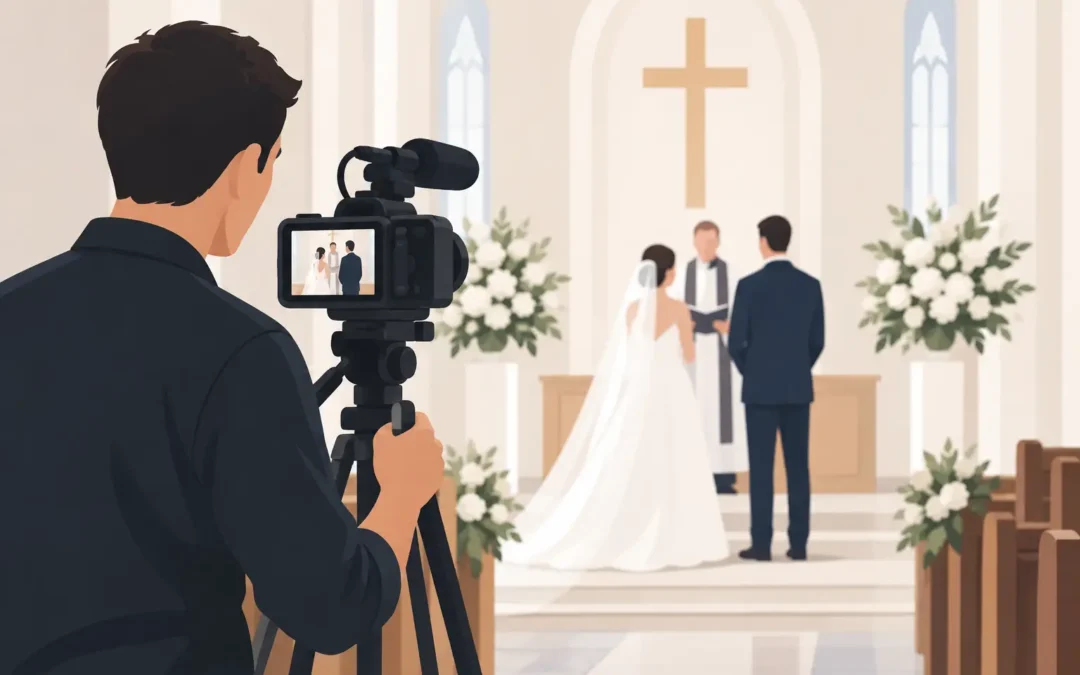
A church wedding videography example film should do more than show a beautiful building and a couple at the altar. It should let you feel the hush before the entrance, hear the vows clearly, catch the squeeze of a hand during the hymns and relive the huge release of joy as you walk back down the aisle together.
For couples planning a church wedding in Somerset, Bath, Bristol or the wider South West, watching example films is one of the best ways to work out whether a videographer is right for you. Churches bring their own atmosphere, traditions and practical considerations. The right filmmaker knows how to respect the setting while still creating something cinematic, personal and full of life.
What a Great Church Wedding Videography Example Film Shows
A polished highlights film can be lovely, but look beyond the dreamy shots of stained glass and confetti. The best examples reveal how a filmmaker tells a complete story when the day has meaningful words, formal moments and a room full of emotion.
Start with the opening. Does it build anticipation naturally? A film may use the sound of a letter being read, a parent’s voice, or a few carefully chosen words from the ceremony to give the footage a sense of purpose. The visual details matter too – flowers being pinned, shoes on old flagstones, guests arriving beneath the church porch – but they should support the story rather than take it over.
Then watch how the ceremony itself is handled. You want a film that feels present without appearing intrusive. There should be a good sense of the scale of the church, alongside closer moments: a nervous smile, a tearful reading, fingers intertwined during the vows. This balance is where documentary coverage becomes genuinely cinematic.
Most importantly, listen. Churches can be glorious places for sound, but they can also be challenging. High ceilings create echo, heating systems hum, and a quiet voice at the front can be hard for guests to hear, never mind a camera. In a strong example film, vows, readings and music feel clear and warm rather than distant or tinny.
Look for Feeling, Not Just Pretty Footage
Every wedding videographer can select a handful of attractive shots for a social media reel. A full church wedding film, or a longer highlights film, tells you far more about their judgement.
Notice whether the emotion feels earned. Are spoken moments woven into the edit in a way that reflects the couple, or could the film belong to anyone? The right soundtrack can elevate a sequence, but it should never drown out the people who matter most. Your dad’s speech, your best friend’s laugh and the words you say to one another are the details that become more precious with time.
A timeless wedding film does not need to be overly slow or serious. There is space for elegant portraits and romantic light, but also for the big hugs outside the church, a lively confetti moment and the brilliant, slightly chaotic energy of a packed dance floor. If you are a couple who want good fun alongside the emotion, look for a film that moves between those moods with confidence.
It is also worth paying attention to the guests. A church ceremony is rarely just about the couple at the front. Look for grandparents watching proudly, friends singing with gusto and children fidgeting adorably in the pews. These small moments give a film warmth and make it feel like a true record of everyone who shared the day.
Church Sound Is the Detail You Cannot Judge From Stills
Photography can preserve the look of your ceremony beautifully. Film preserves the voices, pauses and atmosphere that photographs cannot hold. That difference becomes especially powerful in a church.
When watching a church wedding videography example film, listen for the words rather than simply skipping to the music-led montage. Can you hear both partners during the vows? Are readings captured clearly? Does the vicar or celebrant sound natural? If there is live music, does it add atmosphere without becoming distorted?
This quality usually comes from careful preparation and discreet professional equipment. A filmmaker may place small audio recorders with the couple, the person conducting the ceremony or near a speaker, depending on what the church permits. Multiple camera angles also help preserve the moment without anyone needing to move around during the vows.
There is a trade-off here. Some churches have stricter rules about where videographers can stand, whether they may move during the service, and whether cameras can be placed near the front. An experienced videographer will not promise an angle that the church will not allow. Instead, they will plan around the restrictions, communicate respectfully with the clergy and still make the ceremony feel intimate on film.
Notice How the Filmmaker Works Within the Church
A church is an active place of worship, not a film set. The best wedding films respect that completely.
As you watch examples, ask yourself whether the filming feels calm and unobtrusive. Are there lots of dramatic moving shots during solemn parts of the service, or does the footage feel considered and discreet? Cinematic does not have to mean conspicuous. Often, the strongest work comes from anticipation, clever positioning and knowing when to simply let a moment unfold.
Good coverage should also show an understanding of changing light. A bright summer afternoon can pour through one window and leave the rest of the aisle in shadow. A winter ceremony may be beautiful but dark by mid-afternoon. Skilled filmmakers work with the available light to keep skin tones natural, retain the character of the building and avoid making the church feel flat or artificially lit.
Drone footage can add a wonderful sense of place, particularly for a historic Somerset church or a village surrounded by rolling countryside. It is most effective as part of the wider story: an establishing view before guests arrive, or a joyful scene after the ceremony. It will not be suitable at every venue, and it should never distract from the people at the heart of the day.
Questions to Ask After Watching an Example Film
Once a film gives you that little lump-in-the-throat feeling, it is time to look at the practical fit. The answers will tell you whether the experience behind the camera is likely to feel as good as the finished result.
Ask whether full ceremony and speeches films are included, rather than assuming every meaningful word will appear in a short highlights edit. Find out how sound is recorded, how many cameras are used, and whether the videographer has worked in churches with similar rules or layouts.
It is also sensible to ask about coverage time. A church wedding has a natural build-up: getting ready, guests gathering, the entrance, greetings outside and often a journey on to the reception. You may want filming from preparations through to the dance floor, or you may prefer the ceremony and key parts of the celebration. Neither choice is wrong, but the package should match the story you want preserved.
Finally, think about personality. Your filmmaker will be around during emotional family moments and joyful, high-energy ones. Look for someone whose approach feels relaxed, organised and genuinely enjoyable to have nearby. At Smart Captures Wedding Films, that means bringing calm direction when it helps, then stepping back so the natural moments and good vibes can happen without being staged.
Choose the Film That Feels Like Your Day
A beautiful church may be what first draws your eye to an example film, but it should not be the main character. The film should make you notice the people: the way your partner looks at you during the first hymn, the voices filling the building, the pride on your family’s faces and the celebration waiting just beyond the doors.
Choose a filmmaker whose work makes you feel something before the wedding has even happened. When the style is elegant but honest, and the coverage is quiet but complete, you will have more than a record of the ceremony. You will have a way back to how it all felt.
Trackbacks/Pingbacks