
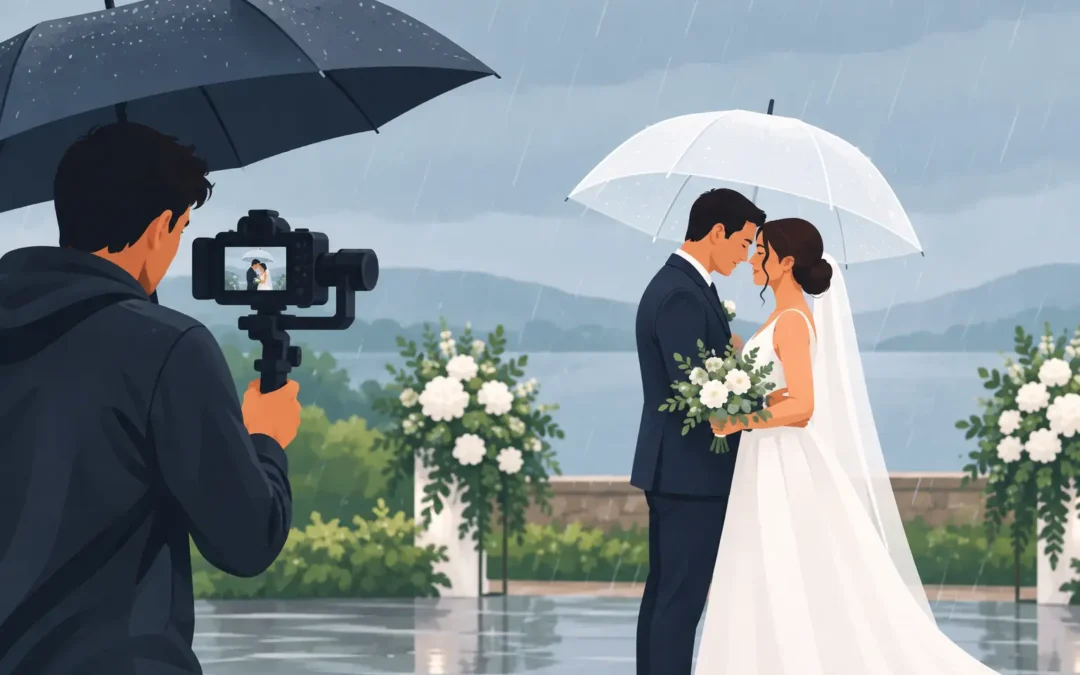
A few raindrops on the window as you wake up can feel like the last thing you needed on your wedding morning. But will rain affect wedding filming? Yes, it can change the plan, the light and where certain moments happen – but it does not have to spoil your film. With an experienced filmmaker, a good wet-weather plan and a willingness to embrace the atmosphere, rain can give your wedding film intimacy, movement and a seriously cinematic feel.
Will rain affect wedding filming on the day?
Rain affects logistics more than it affects the story. The important moments still happen: the anticipation while you get ready, the nervous laughter before the ceremony, your vows, the hugs, the speeches and the dance floor chaos later on. A documentary-led wedding film is built around those real moments, not around an uninterrupted blue sky.
What may change is the timing of your couple footage, the location for group photographs and whether outdoor microphones, cameras or drone coverage can be used at a particular point. Heavy rain also means guests tend to move more quickly between spaces, so your videographer needs to be alert, adaptable and ready before moments unfold.
This is why a proper plan B matters. The best venues across Somerset and the South West tend to have characterful indoor rooms, covered walkways, grand staircases, glasshouses, fireplaces or sheltered entrances that work beautifully on film. Rather than treating those spaces as a compromise, a skilled filmmaker can use them to make the day feel considered and elegant.
The ceremony and speeches are still fully covered
For most couples, the ceremony and speeches are the heart of the wedding film. Rain rarely creates a problem here, especially when these take place indoors or under a solid structure. Professional multi-camera coverage and carefully positioned audio recorders mean your vows and spoken words are captured clearly, without a camera operator needing to stand out in the middle of the room.
If you are planning an outdoor ceremony, the venue should have a clear decision point and a comfortable alternative space. Moving inside can feel disappointing for a moment, but it often creates a wonderfully close, emotional atmosphere. Everyone is together, the sound is more controlled, and those small reactions from family and friends are easier to notice.
Outdoor portraits may need a different rhythm
You do not need to stand in a downpour for an hour to get lovely footage. Often, all that is needed is a short break in the weather, a covered spot or a couple of minutes with umbrellas. Your filmmaker can work around the schedule, perhaps taking a little time after the ceremony, during the drinks reception or just before the evening celebrations.
The key is not to force it. Wet grass, strong wind and a saturated dress are not worth it if they leave you cold, stressed or late for your own party. A great wedding film should reflect how the day felt, and feeling relaxed together will always look better than trying to recreate a summer editorial shoot in sideways rain.
Why rain can look beautiful in a wedding film
Cloudy skies create soft, even light. There are fewer harsh shadows across faces, less squinting and a flattering, natural look that suits timeless wedding films. In the South West, the muted greens of gardens and countryside often become richer after rainfall too.
Rain also gives the camera something to work with. Drops on a window during bridal preparations, umbrellas gathering outside a church, reflections on stone paths and the warm glow of a venue against a darker sky all add texture. These are the details that make a film feel like your day, rather than a collection of generic wedding shots.
Then there is the sound. Rain on a roof before guests arrive, a burst of laughter as everyone runs for cover, the soft rustle of umbrellas – used lightly, these details can add a real sense of place. Wedding films are not only about what you saw. They are about the atmosphere, voices and little sensory memories that bring you straight back to the day.
Of course, there is a trade-off. If the rain is relentless, there may be less footage of wide open grounds and no aerial establishing shots. But a beautiful film does not depend on those things alone. Emotional storytelling, flattering composition, thoughtful audio and genuine connection matter far more.
What happens to drone footage in the rain?
Drone coverage is weather-dependent. Rain, high winds and poor visibility can make flying unsafe or unlawful, so a responsible filmmaker will never take off simply because drone footage was planned. The same applies when conditions are too gusty, even if it has stopped raining.
That does not mean your film will feel smaller. Drone shots are a lovely extra for showing the scale of a venue, coastline or countryside setting, but they are not the foundation of a wedding story. Ground-based cinematic shots can still establish the setting beautifully, whether that is the approach to the venue, the architecture, a sweeping view from under cover or guests arriving through the doors.
If there is a safe weather window earlier or later in the day, it may be possible to capture aerial footage then. Flexibility helps, but it is always better to view drone coverage as a bonus rather than a promise that fights against British weather.
How a professional videographer prepares for wet weather
Rain should never be a surprise to the person filming your wedding. It is part of working in the UK, particularly at countryside venues where conditions can change by the hour. Preparation begins before the day, with a conversation about the venue’s wet-weather options and the timings that are most flexible.
On the day, cameras and lenses are protected between shots, umbrellas and covers are kept close by, and equipment is moved carefully between locations. Just as importantly, your videographer should remain calm. If suppliers look flustered, couples feel it. A positive presence, a quick sense of humour and clear communication can keep the vibes high, even when everyone is checking the radar.
At Smart Captures Wedding Films, the aim is never to turn rain into a drama. It is to keep you enjoying your wedding while quietly adapting the coverage around you. Some of the most memorable footage comes from the unplanned bits: a friend holding an umbrella over the bridal party, a coat draped over someone’s shoulders, or the two of you laughing because the weather had other ideas.
Your wet-weather plan: small choices that make a big difference
Choose umbrellas you would genuinely be happy to see in your film. Clear domes are brilliant because they allow light onto your faces, while simple white, ivory or black umbrellas can look timeless and smart. Avoid bright branded umbrellas if you can, as they can distract in photographs and video.
Talk to your venue coordinator about where guests will gather if it rains, particularly between the ceremony and wedding breakfast. A covered space with good light gives your filmmaker opportunities to capture natural conversations, drinks, hugs and all the excitement you have planned.
Build a little breathing room into the schedule. Ten quiet minutes for the two of you is valuable whatever the weather, but it is particularly helpful when there is a gap in the rain. You do not need a long staged shoot – just a chance to be together away from the crowd while your filmmaker captures some relaxed, natural footage.
Finally, trust your suppliers. Your photographer, videographer and coordinator will be making practical calls throughout the day. If they suggest taking five minutes outside because the light has softened or the rain has eased, it is usually because they have spotted a lovely opportunity.
Rain may change the backdrop, but it cannot take away the people, promises and energy that make your wedding yours. Keep warm, stay close, laugh at the unexpected bits and let the day unfold – those are often the moments you will be happiest to relive.